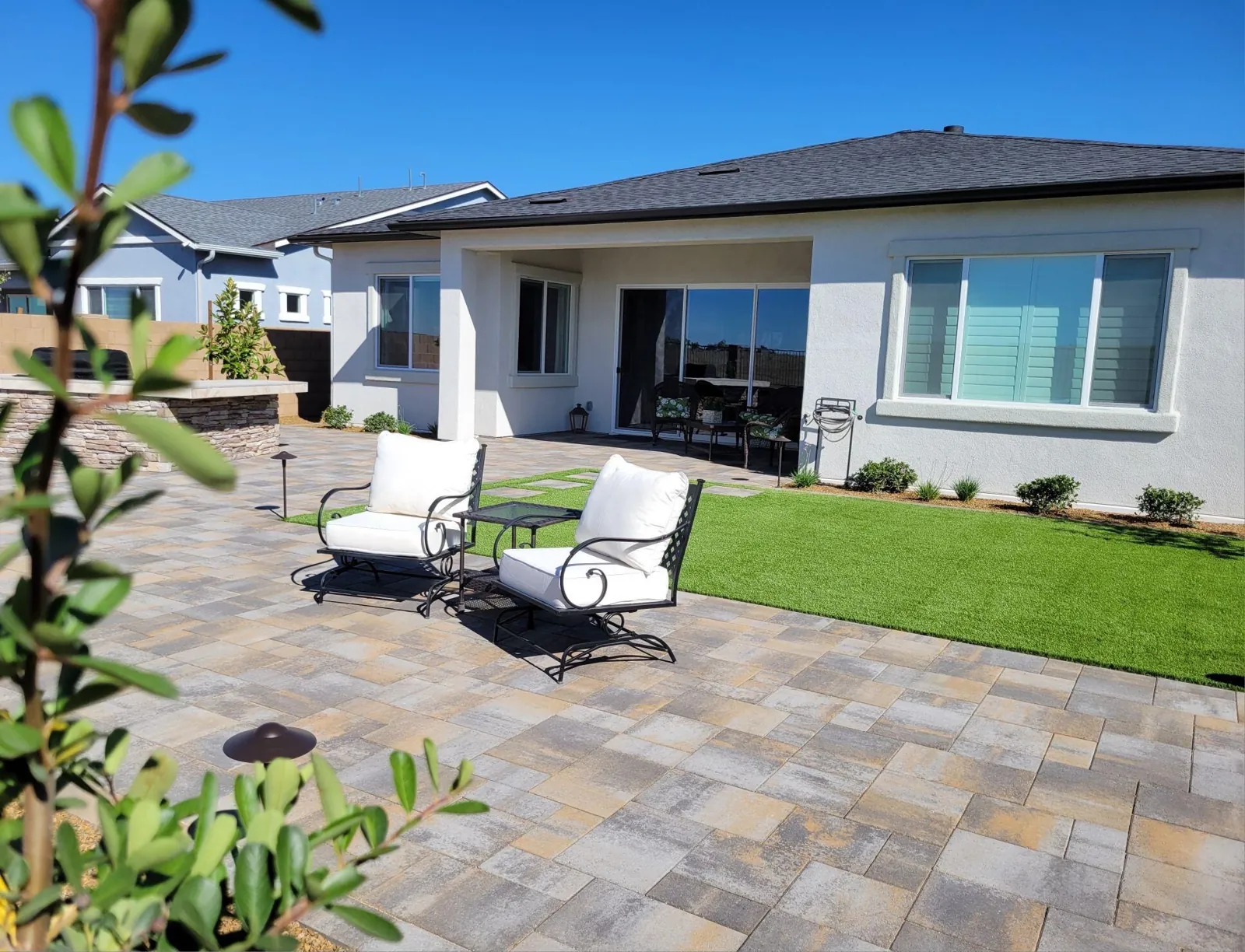
For most backyards in Prescott and Prescott Valley, the pavers vs concrete patio question comes down to movement. Interlocking pavers flex with freeze-thaw cycles and can be lifted and reset one piece at a time, while a poured slab is cheaper to place but tends to crack as the ground shifts. Concrete still makes sense for simple, utilitarian spaces.
Key takeaways
- Individual concrete pavers are made far denser than typical residential poured concrete, but the finished patio is only as good as the base underneath it.
- A slab is one rigid piece, so soil movement shows up as cracks. A paver surface is hundreds of small pieces with joints that let it move without breaking.
- Paver repairs are local and nearly invisible; concrete repairs usually leave a patch that never quite matches.
- Plain concrete usually costs less on day one. Pavers often earn their keep through easier repairs, design freedom and a longer useful look.
- Our high-desert winters, with frost on many nights from late October into spring, punish any patio that was built on a weak or poorly compacted base.
Pavers vs concrete patio at a glance
Homeowners usually come to us with one of two pictures in mind. Some want the clean, continuous look of a smooth gray slab. Others have seen a neighbor’s patio laid in tan and charcoal blocks and like the texture. Both are built from cement, sand and aggregate, so the raw ingredients are close cousins. The real differences are in how each product is manufactured, how it is installed and how it behaves after a few winters on our hillsides.
The table below sums up how the two options compare on the points that matter most in a high-elevation yard. We expand on every row further down.
| Factor | Interlocking concrete pavers | Poured concrete slab |
|---|---|---|
| Unit strength | Factory-made units meeting ASTM C936 average at least 8,000 psi | Typical residential mixes run about 3,000 to 4,000 psi |
| Response to soil movement | Joints let the surface flex; individual pieces may shift but rarely break | Rigid; movement tends to show as cracks, even with control joints |
| Repairs | Lift the affected pieces, fix the base, reset the same pavers | Patch, grind or replace sections; patches usually show |
| Design options | Many shapes, colors, borders, inlays and curves | Broom finish, exposed aggregate, color or stamping |
| Ready to use | Walkable right after installation | Needs curing time before furniture and heavy loads |
| Routine care | Top up joint sand, occasional weed or debris control, optional sealing | Fill cracks as they appear, optional sealing |
| Upfront cost | Usually higher than plain concrete | Usually lower for a plain broom finish |
Neither column is a winner on every line. That is why we walk each client through how they actually plan to use the space, how the ground on their lot behaves and how long they intend to stay in the home before recommending a surface. If you would like to see how we approach that conversation, our landscape design service starts with exactly this kind of site walk.
Why does Prescott’s climate change the answer?
In Phoenix, a patio mostly fights heat. Up here, at roughly 5,400 feet, it fights cold, moisture and constant expansion and contraction. Prescott’s average freeze season runs from about late October to the first of May, and the gap between the daytime high and the overnight low averages close to 30 degrees Fahrenheit across the year. That means the top inch of soil and anything resting on it gets warmed and chilled again and again, sometimes in a single day.
Water is the other half of the story. Much of our annual rain arrives in short, heavy summer storms, and winter brings snow that usually melts within days. Every melt and every storm pushes moisture into the ground under a patio. When that damp soil freezes, it can expand and lift whatever sits above it, a process known as frost heaving. When it thaws, the soil settles back, not always to the same place.
A surface that cannot tolerate small, uneven movements will eventually show stress. That is the core reason so many high-desert contractors lean toward segmented paving for outdoor living areas. If you want the local forecast picture before you schedule any outdoor work, the National Weather Service office in Flagstaff covers the Prescott area and is worth bookmarking.
Granite soils and mixed fill
Many lots around Prescott sit on decomposed granite and rocky native soil, which compacts well when it is handled properly. New subdivisions, though, often have pockets of loose fill pushed around during grading. A patio poured over a soft pocket will settle unevenly there, and a slab cannot hide that. Pavers can still settle over a soft spot, but the fix is far less dramatic, as we explain below.
Which is stronger, a paver or a slab?
If you hold a single paver in one hand and a chunk broken off a patio slab in the other, the paver is almost always the denser, harder piece. Interlocking concrete pavers made to the ASTM C936 standard must average at least 8,000 psi in compressive strength. They are produced in a factory with a dry, low-water mix that is pressed and vibrated into molds, then cured under controlled conditions. That process leaves very little room for air voids and weak spots.
Poured concrete for a residential patio is commonly ordered somewhere in the 3,000 to 4,000 psi range. It is mixed with more water so it can flow from the chute and be screeded and finished by hand. Weather on pour day, how long the crew waits before finishing, and how the slab is cured all influence the final quality. A well-placed slab is perfectly strong for foot traffic and patio furniture. It is simply more variable than a factory product.
Strength of the piece versus strength of the system
Here is the part that often gets lost in online comparisons: a paver patio does not rely on each block being strong on its own. It relies on the whole assembly working together. Compacted aggregate base, a thin bedding layer, the pavers themselves, sand locked into every joint and a solid edge restraint around the perimeter all share the load. Skip or shortcut any one of those layers and even the toughest pavers will rock, dip or spread apart. You can read more about the history and types of segmental surfaces on the paver flooring overview on Wikipedia.
What happens when the ground moves?
Concrete is strong when it is squeezed and comparatively weak when it is bent or pulled. A concrete slab is one continuous plate, so when one corner is pushed up by frost or another corner sinks into soft fill, the slab has to bend. Once the bending stress passes what the concrete can resist, it cracks. Installers cut or tool control joints into a slab to encourage those cracks to form in straight, tidy lines, but control joints guide cracking; they do not prevent it.
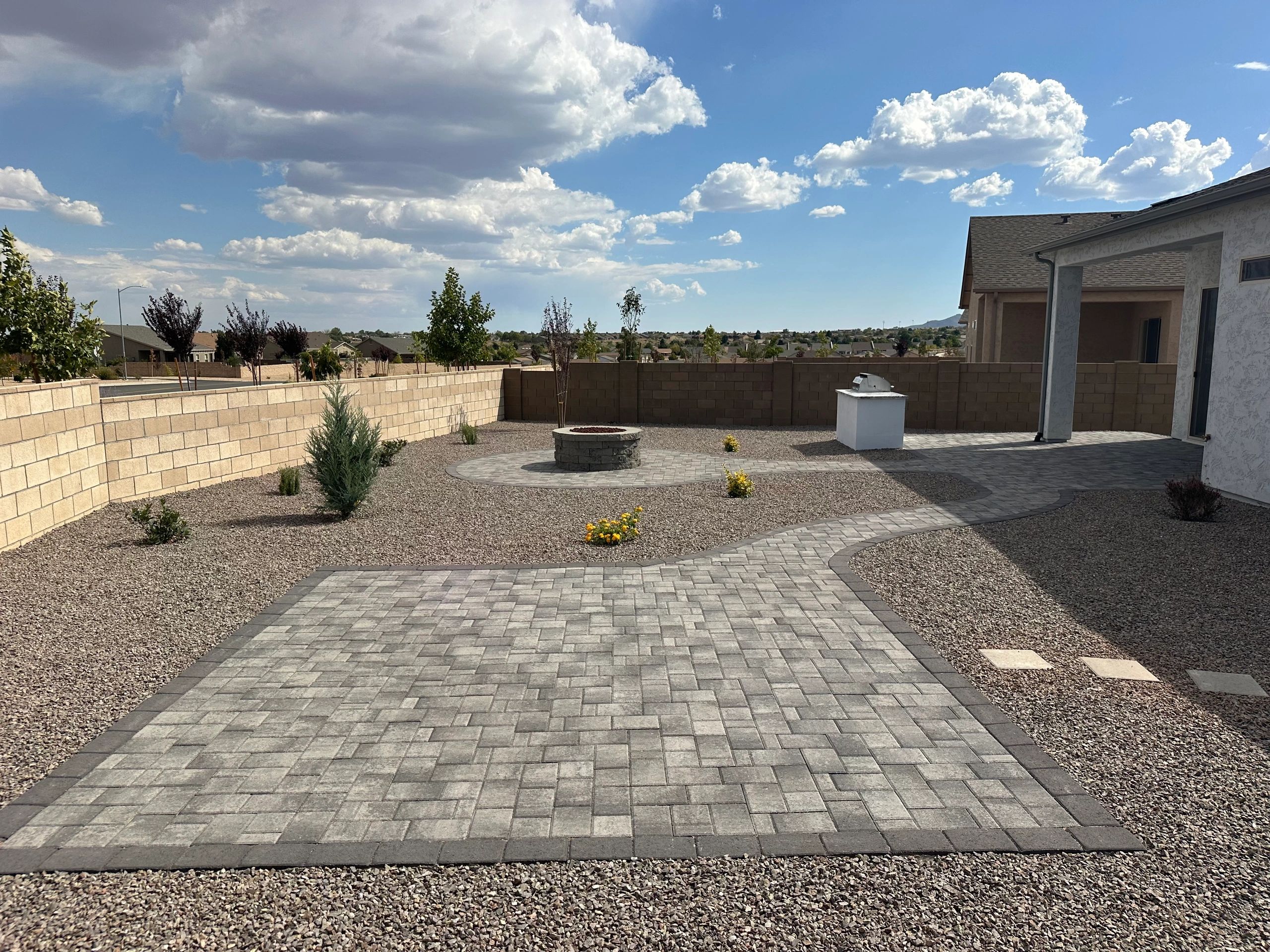
A paver surface behaves differently. Every joint between blocks is a tiny hinge. When the base underneath shifts a little, the pavers above can tilt and follow it without any of them snapping. The joint sand keeps them locked side to side so the surface still feels solid underfoot. If the movement is large enough to create a noticeable dip, the pavers stay whole and can be lifted out and reset.
Signs each surface is under stress
- Concrete: hairline cracks that widen over time, one side of a crack sitting higher than the other, flaking or scaling on the surface, and gaps opening where the slab meets the house or steps.
- Pavers: a low spot that holds water after rain, a few pieces that rock when stepped on, joints that have lost sand, or edge pavers drifting outward where the restraint has failed.
Both sets of symptoms usually point back to the same root cause: water and a base that was not built for our conditions. The difference is how disruptive the fix is.
Base preparation: the part nobody sees
We tell every client the same thing. The finished surface is what you see, but the base is what you are really paying for. A patio, whether it is poured or laid, is only as stable as the ground and aggregate beneath it.
What a sound paver base includes
- Locate utilities first. State law says a locate request must go to Arizona 811 before any excavation, with a minimum notice of two working days, and we never skip it.
- Excavate below organic material and any loose topsoil until we reach firm native ground.
- Compact the subgrade so the soil underneath will not keep settling after the patio is in place.
- Install and compact crushed aggregate in lifts, building the base up in layers rather than dumping it all at once.
- Set a slight pitch away from the house so rain and snowmelt run off the surface instead of pooling.
- Screed a thin, even bedding layer to seat the pavers.
- Lay the pavers, install edge restraint and compact the field, then sweep jointing sand in until the joints are full.
What a sound slab base includes
A poured patio also needs a compacted subgrade and a granular base, proper forms, reinforcement where the design calls for it, and control joints at sensible spacing. Concrete is far less forgiving of a rushed base because problems cannot be corrected after the pour. Once it hardens, any soft spot underneath is locked in until the slab cracks over it.
On sloped lots, a patio is often paired with a wall that creates a level pad. When that is the case, the wall and patio should be planned together. Our retaining wall work is regularly built alongside new paver patios for exactly this reason.
Repairs and long-term upkeep compared
Every outdoor surface needs some attention over its life. The question is what kind of attention and how often.
Living with a paver patio
With pavers, routine care is mostly about the joints. Wind, heavy rain and sweeping can pull sand out over time, so topping it up every so often keeps the interlock tight. Polymeric jointing sand, which hardens after it is misted with water, reduces washout and makes it harder for weeds and ants to settle in. Some owners choose to seal their pavers to deepen the color and make spills easier to clean; others leave them natural. Both are reasonable choices.
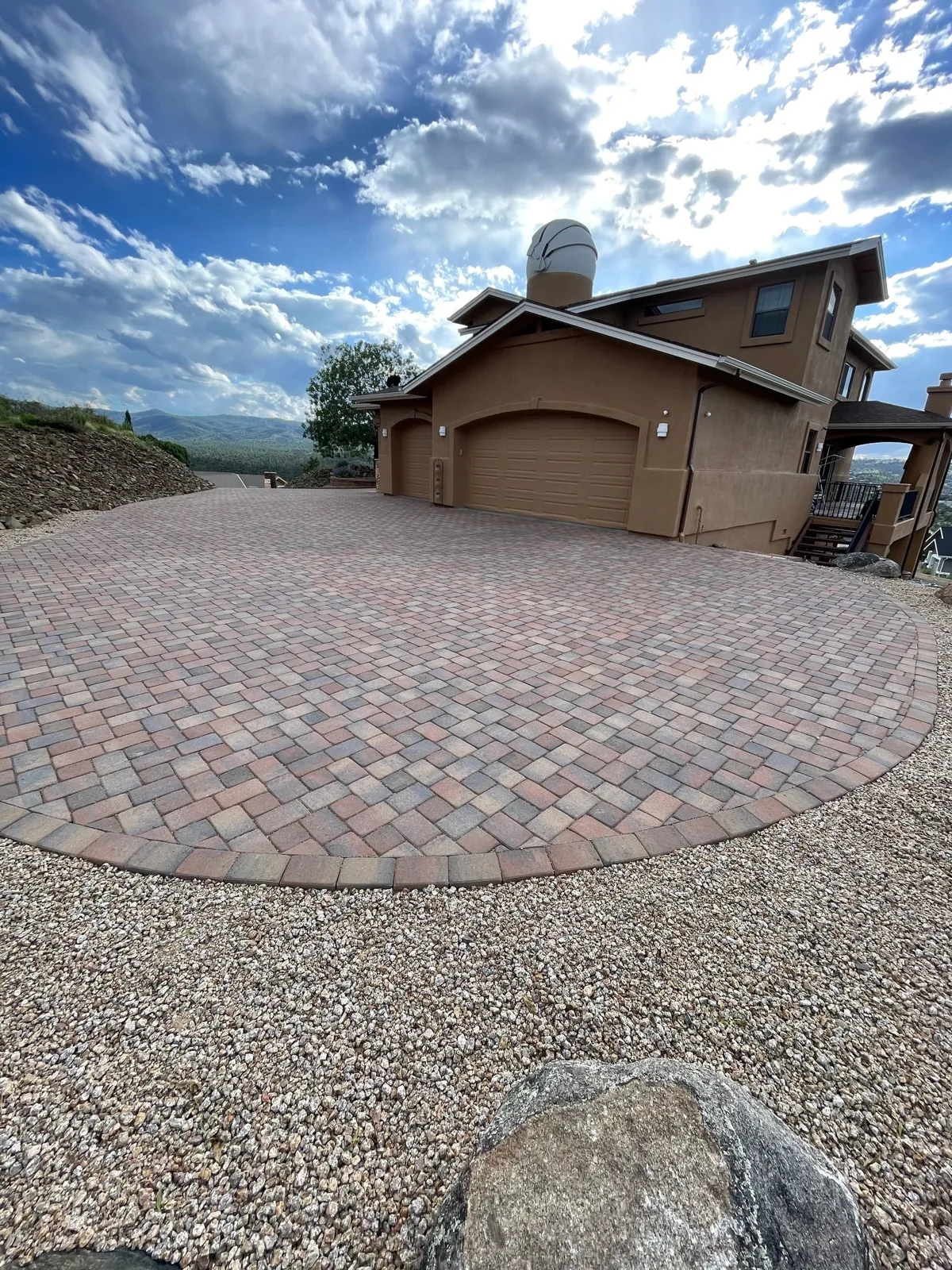
When something does go wrong, such as a dip caused by a broken irrigation line or a tree root, the repair is surgical. We pull up the affected pavers, correct the base, and put the very same pieces back. Done well, you cannot tell afterward where the work happened. That is the single biggest practical advantage pavers have over a slab.
Living with a concrete patio
A slab asks for very little day to day. Sweep it, rinse it, and occasionally clean stains. Over the years, the main job is watching for cracks and sealing them before water gets in, because water entering a crack and freezing will widen it. Sealing the whole surface can also help it resist moisture and staining.
Major repairs are where concrete gets harder. A sunken or heaved section usually has to be cut out and repoured, or lifted with specialized equipment. New concrete rarely matches the color and texture of the old, so the repair stays visible. Stamped and colored slabs are even harder to match.
Seasonal upkeep checklist for either surface
- After the summer storm season, look for low spots, puddles or washed-out joints.
- Before the first hard freeze, clear leaves and debris so moisture does not sit on the surface all winter.
- Use a plastic shovel for snow so you do not chip edges or scrape the finish.
- Choose ice melt carefully and use it sparingly; read the label for products labeled safe for concrete and masonry.
- In spring, check edges, steps and the line where the patio meets the house for gaps or movement.
If you would rather hand this off, our yard maintenance team can keep an eye on hardscape along with the rest of the property.
Looks, heat, glare and traction
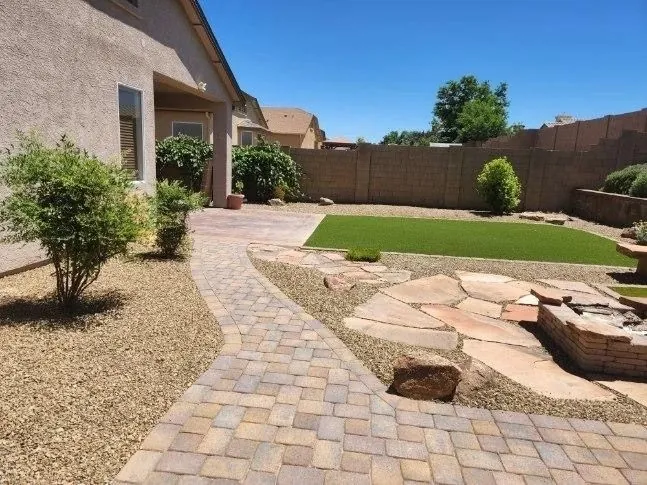
Design is where pavers pull furthest ahead. They come in a wide range of shapes, sizes, colors and textures, from tumbled blocks that feel old-world to large, crisp slabs with a modern profile. Borders, banding, circular inlays and gentle curves are straightforward to build. They also pair naturally with other materials we use every day, such as artificial turf, gravel beds and natural flagstone.
Concrete can be dressed up as well. A broom finish gives grip, exposed aggregate shows off the stone in the mix, integral color tints the whole slab, and stamping presses patterns into the surface to mimic stone or brick. Stamped concrete is still a single slab, though, so it shares the same cracking behavior as plain concrete, and a crack running through a faux-stone pattern is hard to disguise.
How hot does each surface get?
Prescott summers are milder than the valley below, with only a few dozen days a year reaching 90 degrees, but a sunny patio still warms up quickly at this elevation. Color matters more than material here. Light tan, buff and gray surfaces reflect more sunlight and stay noticeably more comfortable underfoot than dark charcoal or deep red ones, whether they are pavers or concrete. Very bright, smooth white concrete can create glare, so many people prefer a warmer, mid-tone color.
Traction in wet and icy weather
Pavers have a slightly textured face and many small joints, which helps with grip after a monsoon shower or a light dusting of snow. Smooth troweled concrete can be slick when wet, which is why outdoor slabs are normally broom finished. With either surface, shaded spots that stay icy after a winter storm deserve extra care.
What drives the cost of each surface?
We do not publish a per-square-foot price, because no two yards are alike and a number pulled from a national website rarely reflects what happens on a sloped, rocky lot in Yavapai County. What we can share is what moves the price up or down so you can compare quotes on equal terms.
Factors that affect both options
- Access: whether equipment can reach the backyard or materials must be moved by hand through a side gate.
- Excavation and grading: rocky ground, slopes and old concrete or debris to haul away all add time.
- Base depth: softer soils and areas that will carry heavier loads need more aggregate.
- Size and shape: curves, steps and multiple levels take longer than a simple rectangle.
- Add-ons: seat walls, fire features, lighting conduit and drainage details built in during construction.
Factors specific to pavers
Paver cost depends heavily on the product chosen, the laying pattern and the amount of cutting required. Herringbone patterns and curved borders mean more cuts and more labor. In exchange, there is no curing period, no risk of a bad pour day and no need to bring in a concrete truck.
Factors specific to concrete
A plain broom-finished slab is usually the lowest upfront cost of any permanent patio. Decorative finishes, colors and stamping add cost quickly, and stamped work can approach the price of pavers while keeping the cracking risk of a slab.
When you compare bids, ask each contractor how deep the base will be, how it will be compacted, how the edges will be restrained or formed, and who holds the license. You can verify any Arizona contractor’s license status through the Arizona Registrar of Contractors. Ours is ROC 336502.
When is concrete the better pick?
We install a lot of pavers, but we are honest about where a slab is the sensible choice. Concrete tends to make sense in these situations:
- A purely practical surface such as a trash-can pad, an equipment pad or a utility side yard where appearance does not matter.
- A very tight budget where the priority is getting a hard, usable surface down now.
- Matching an existing slab, such as extending a covered patio poured by the home builder.
- Spots where a perfectly continuous, joint-free surface is needed, for example under certain equipment.
For outdoor living spaces where people gather, cook and relax, especially those with a fire pit, pergola or outdoor kitchen, pavers usually deliver a better long-term result in our climate. Many homeowners end up with a mix: concrete where it is purely functional and pavers where they spend their evenings.
Can you combine both?
Yes, and it is common. A paver border around an existing slab can soften its look and tie it into a new patio extension. In some cases, pavers can even be installed over a sound existing slab, which we cover in the FAQ below. Our paver and hardscaping page shows the range of projects we build.
Choosing a patio surface in our part of Yavapai County
Each part of our service area brings its own soil, slope and wind, and those differences shape how a patio should be built.
- Prescott: higher elevation, more shade from mature trees and more sloped lots. Shaded patios stay damp and icy longer in winter, so base quality and drainage pitch are critical.
- Prescott Valley: many newer homes with builder-poured slabs and block-wall backyards. Extending or wrapping those slabs with pavers is one of our most frequent requests.
- Chino Valley: larger, more open lots where big patios and long walkways are common, and wind can strip joint sand from exposed areas.
- Dewey-Humboldt: rural properties where practical, durable surfaces are the priority, and a mix of concrete for utility areas and pavers for living areas often works well.
Whatever you choose, build it once and build it right. Browse finished projects in our project gallery to see how pavers look after they have been through a few of our seasons.
Weighing pavers against concrete for your yard?
We will walk your lot, check the soil and slope, and explain which surface fits how you live outdoors, with no pressure either way. Estimates are free. Ring us at (928) 848-0706 or describe your patio plans online. Every hardscape job we take on is covered by our bond, our insurance and Arizona ROC license 336502.
Pavers vs concrete patio: frequently asked questions
Which costs less upfront, a paver patio or a poured concrete patio?
A plain broom-finished concrete slab is usually the lower upfront cost. Pavers cost more to buy and install because each piece is placed by hand and the base is built in compacted layers. Decorative stamped concrete narrows that gap considerably. Over many years, the easier repairs and longer-lasting appearance of pavers can offset part of their higher starting price.
Can pavers be installed over an existing concrete slab?
Sometimes. If the slab is structurally sound, reasonably level and drains away from the house, thinner pavers can be set over it using an appropriate bedding method. If the slab is badly cracked, heaving or holding water, it is better removed so a proper base can be built. Added height at doors and steps must also be checked before deciding.
How is a cracked concrete patio repaired compared with a damaged paver area?
Small concrete cracks are cleaned and filled with a flexible sealant, while larger failures usually mean cutting out and repouring a section that will not match the original. With pavers, the affected pieces are lifted, the base beneath is corrected and the same pavers are reset, so the repaired area blends in with the rest of the patio.
Will weeds grow between pavers?
Weeds can sprout where windblown seeds land in joints that have lost sand or collected organic debris. Keeping joints full, sweeping regularly and using polymeric jointing sand, which hardens once activated with water, all reduce the problem. Weeds rarely grow up through a well-built base; most start from seeds on the surface.
Should I seal my patio in the high desert?
Sealing is optional for both surfaces. On concrete, a quality sealer helps limit water absorption and staining. On pavers, it can enrich color, make cleanup easier and help hold joint sand in place. Strong sun at our elevation breaks sealers down over time, so plan on periodic reapplication if you choose to seal.
Which patio surface stays cooler on a sunny afternoon?
Surface color matters more than whether you pick pavers or concrete. Light tan, buff and soft gray tones reflect more sunlight and stay more comfortable than charcoal, deep red or dark brown. Shade from a pergola, tree or covered patio makes the biggest difference of all for summer comfort.
Is stamped concrete a good compromise between pavers and plain concrete?
Stamped concrete gives a patterned, stone-like appearance at a cost that often falls between plain concrete and pavers. Because it is still one continuous slab, it can crack with soil movement, and those cracks cut across the pattern. Repairs are difficult to blend because the color and stamp texture rarely match exactly.
Can a paver patio support a hot tub or a heavy outdoor kitchen?
Pavers can carry heavy loads when the base is designed for them, which usually means deeper, well-compacted aggregate under the load area. Always follow the hot tub or appliance manufacturer’s foundation requirements, as some specify a concrete pad. We plan the base around the heaviest item you intend to place on the patio before construction starts.
Is ice melt safe to use on pavers and concrete?
Use any deicer sparingly and read the label first. Products marketed as safe for concrete and masonry are the better choice, and newly poured concrete is especially vulnerable during its first winter. Shoveling or sweeping snow promptly reduces how much ice melt you need, and rinsing residue off in spring protects both surfaces and nearby plants.
Do tree roots damage pavers or concrete more?
Roots can lift either surface if a patio is built too close to a large tree. Concrete tends to crack where a root pushes up, which usually means cutting out a section. Pavers will lift too, but the pieces can be removed, the root situation addressed and the same pavers relaid, making pavers the more forgiving choice near trees.