Tag: Prescott AZ

  • Firewise Landscaping, Prescott AZ: A Zone-by-Zone Guide to Defensible Space

    Firewise Landscaping, Prescott AZ: A Zone-by-Zone Guide to Defensible Space

    Good firewise landscaping Prescott homeowners can count on means arranging your yard so a wildfire, and especially wind-blown embers, finds little to burn near your house. You keep the first five feet around the home noncombustible, thin and space vegetation out to about 100 feet, remove ladder fuels, and maintain it all before the dry, windy weeks of late spring.

    Key takeaways

    • Most homes lost to wildfire are ignited by embers landing on or next to the house, not by a wall of flame, so the area closest to your walls matters most.
    • NFPA’s Firewise approach splits your property into three home ignition zones: 0 to 5 feet, 5 to 30 feet and 30 to 100 feet.
    • Inside five feet, swap bark and wood chips for rock, pavers or bare mineral surfaces, and keep plants out of that strip.
    • Spacing and pruning break the “fuel ladder” that lets ground fire climb into shrubs, trees and eaves.
    • Firewise work is never one-and-done; a yearly cleanup before the late-spring dry spell keeps the protection real.

    Why does Prescott need firewise landscaping?

    Prescott sits at roughly 5,400 feet among the Bradshaw Mountains, where chaparral, juniper, oak and ponderosa pine run right up to neighborhoods. Planners call this blend of homes and wildland the wildland-urban interface, and a large share of Yavapai County lives inside it. The local weather pattern stacks the odds further. Spring and early summer are the driest stretch of the year here, with May and June averaging well under an inch of rain combined, and that dry spell usually arrives with gusty afternoon winds. Grasses cure, shrubs lose moisture, and a single spark can travel fast before the July monsoon finally brings relief.

    People in this area understand the stakes. The Yarnell Hill Fire in 2013 took the lives of 19 Granite Mountain Hotshots from the Prescott Fire Department, and that loss still shapes how many families here think about the land around their homes. Firewise landscaping will not stop a wildfire. What it does is give your house a far better chance of surviving one, and give firefighters a safer place to work if they arrive.

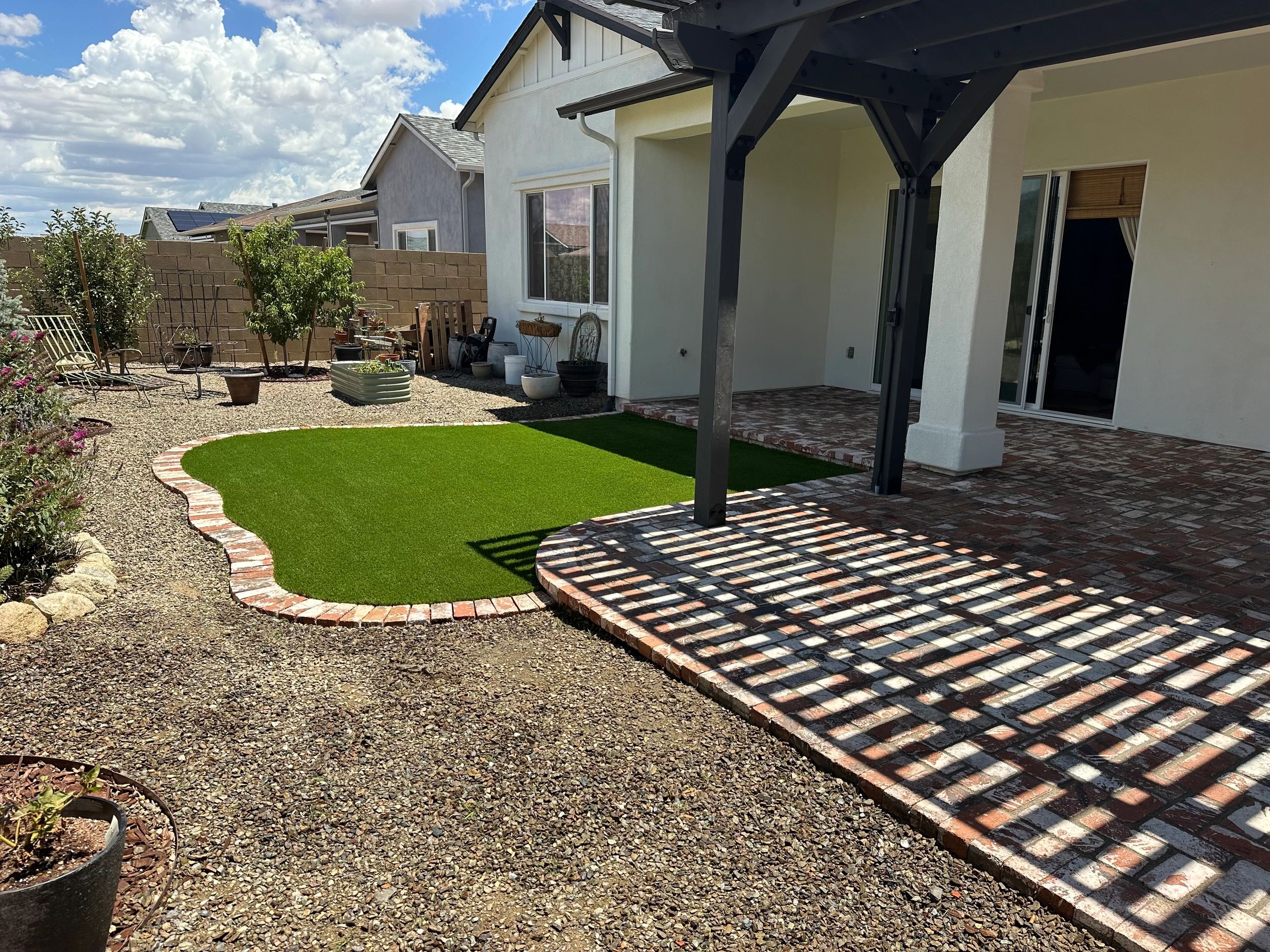
    The good news is that a fire-resistant yard does not have to look bare or barren. Many of the features homeowners already want, such as paver patios, gravel paths, stone walls and tidy, well-watered planting beds, double as fire-smart design when they are placed with intent.

    How do embers actually ignite homes?

    When people picture wildfire damage, they imagine a towering flame front rolling over a house. In reality, many homes ignite from embers: burning bits of bark, needles and debris lofted by wind, sometimes well ahead of the main fire. Those glowing fragments land in gutters, on doormats, in a pile of firewood, against a wooden fence, or in a bed of shredded bark beside the foundation. If something there catches, a small spot fire can spread into vents, siding or the deck, and the house burns even though the main fire never touched it.

    That is why firewise design focuses so hard on the ground right next to your walls. Ember showers can last for a long time during a wind-driven event, and they land in the same places over and over: corners, inside angles where walls meet, under decks and along fence lines where debris collects. The goal is simple to state: when an ember lands within arm’s reach of your house, it should find rock, concrete, metal or bare soil, not fuel.

    Radiant heat and direct flame

    Embers are not the only threat. Large shrubs or trees burning close to a wall throw intense radiant heat that can crack windows or ignite siding, and tall vegetation touching eaves can carry flame directly to the roof. Spacing plants farther apart and keeping big fuel loads away from the house reduces both of these pathways at the same time.

    What are the three home ignition zones?

    The NFPA Firewise USA program organizes the land around a house into three rings, measured outward from the walls and any attached deck. Each ring has a different job, and the effort you put in should be heaviest near the house and lighter as you move away.

    Zone Distance from home Main goal Typical actions
    Immediate 0 to 5 feet Nothing that can catch an ember Rock or pavers instead of bark, no plants against walls, clean gutters and roof, move firewood away
    Intermediate 5 to 30 feet Slow and lower any fire that approaches Space shrubs into islands, prune trees up, mow grass short, use hardscape breaks
    Extended 30 to 100 feet Keep fire on the ground and away from crowns Thin dense brush, clear dead material, separate tree canopies, remove ladder fuels

    If your lot is small, the outer zones may land on a neighbor’s property or common area, which is one reason firewise efforts work best when a whole street participates. More on that near the end of this guide.

    Zone 1: the noncombustible strip (0 to 5 feet)

    This is the single most valuable place to invest. Walk the perimeter of your house and look down. Anything that would burn if a glowing coal sat on it for a minute should go or be replaced.

    Swap organic mulch for mineral cover

    Shredded bark, pine straw and wood chips are popular because they look natural and hold moisture, but next to a wall they act like kindling. Replace them within that five-foot band with crushed rock, river cobble, decomposed granite or pavers. A clean border of stone also makes it easy to spot debris and sweep it away. Our paver and hardscaping work often starts right here, turning a mulched strip into a walkway or patio edge that looks finished and gives embers nothing to work on.

    Keep plants out of the strip

    Even healthy plants collect dry leaves at their base and can carry fire to siding. Within five feet, the safest choice is no plants at all. If you want some softening, use well-watered, low-growing plants in containers that you can move, and keep them clear of windows and vents.

    Clean the “hidden” fuel

    • Clear needles and leaves from gutters, roof valleys and the space under decks.
    • Move firewood, lumber, spare propane cylinders and trash cans at least 30 feet from the house during fire season.
    • Replace coir doormats and wicker furniture near doors with materials that will not smolder.
    • Check that foundation and attic vents have fine metal mesh so embers cannot slip inside.
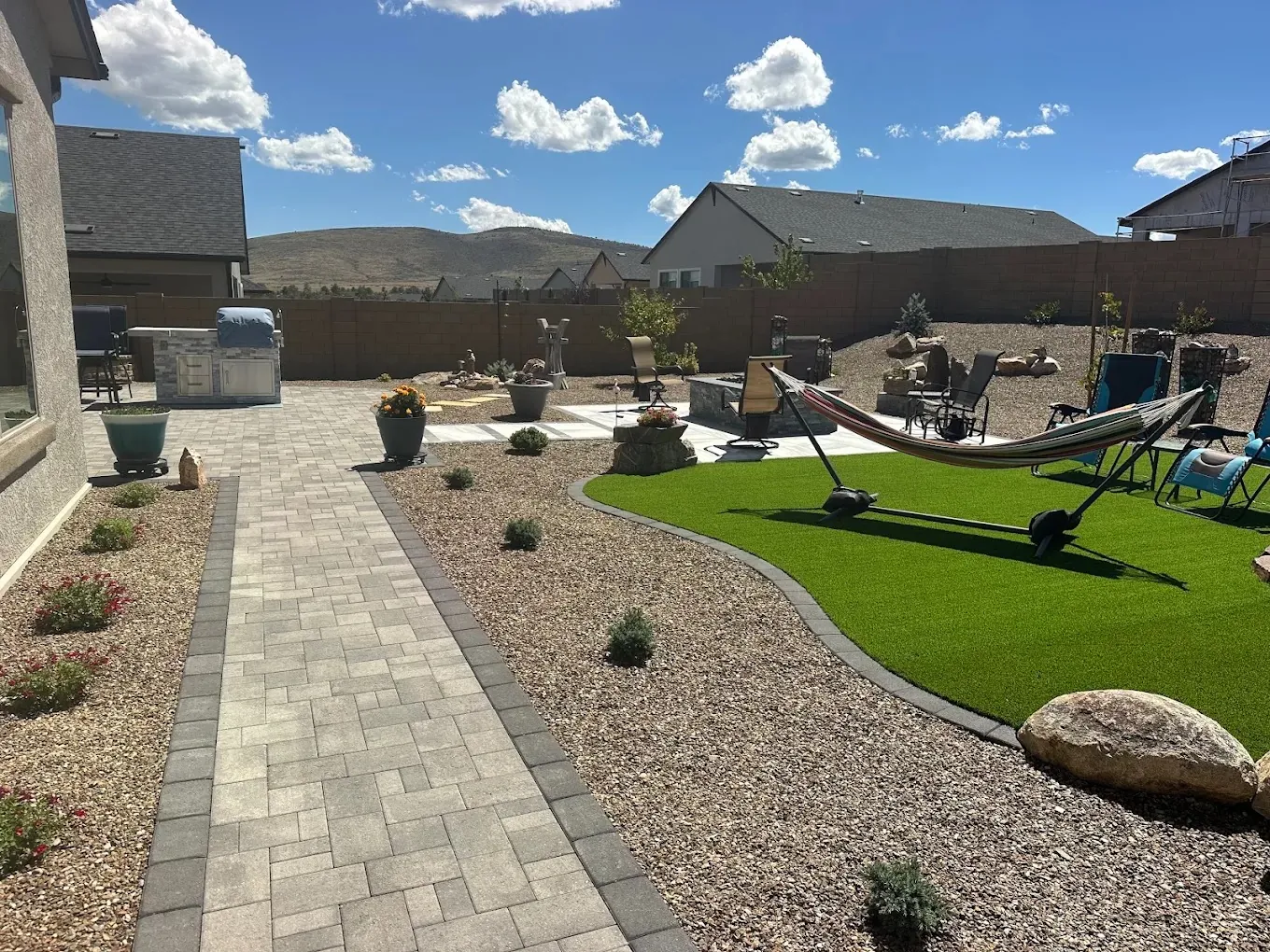
    Firewise landscaping Prescott example: paver walkway, gravel beds and spaced boulders in a desert backyard
    Pavers, gravel and boulders give embers very little to ignite, while still reading as a finished, inviting backyard.

    Zone 2: the managed yard (5 to 30 feet)

    Beyond the noncombustible strip, plants are welcome, but arrangement becomes everything. The idea is to break up continuous fuel so that any fire reaching this zone stays low, slow and patchy instead of racing from one shrub to the next.

    Create islands, not hedges

    Group shrubs into separate islands with gravel, pavers or low irrigated groundcover between them. A solid hedge line or a band of dense brush connects fuel the way a fuse connects to a firework. Gaps between groups interrupt that path. Thoughtful landscape design can make these islands look intentional, with paths and seating areas doing double duty as firebreaks.

    Prune up and thin out

    Firewise guidance recommends removing lower tree branches so there is a clear gap between the ground and the canopy. NFPA suggests pruning mature trees six to ten feet up from the ground, and for smaller trees, limiting pruning to about a third of the tree’s height so it stays healthy. In the intermediate zone, the same guidance calls for generous spacing between tree crowns, roughly 18 feet, so fire cannot hop from one canopy to the next.

    Water and mow what stays green

    Plants with good moisture content resist ignition far better than drought-stressed ones. A tuned drip irrigation system keeps beds hydrated without wasting water, and any native grass areas should be cut short, around four inches or lower, once they cure in late spring.

    Use hardscape as firebreaks

    Patios, walkways, gravel courts and low stone walls all interrupt fuel. Where a slope runs toward the house, a stone retaining wall can create a level, noncombustible terrace that slows fire moving uphill, which it tends to do quickly.
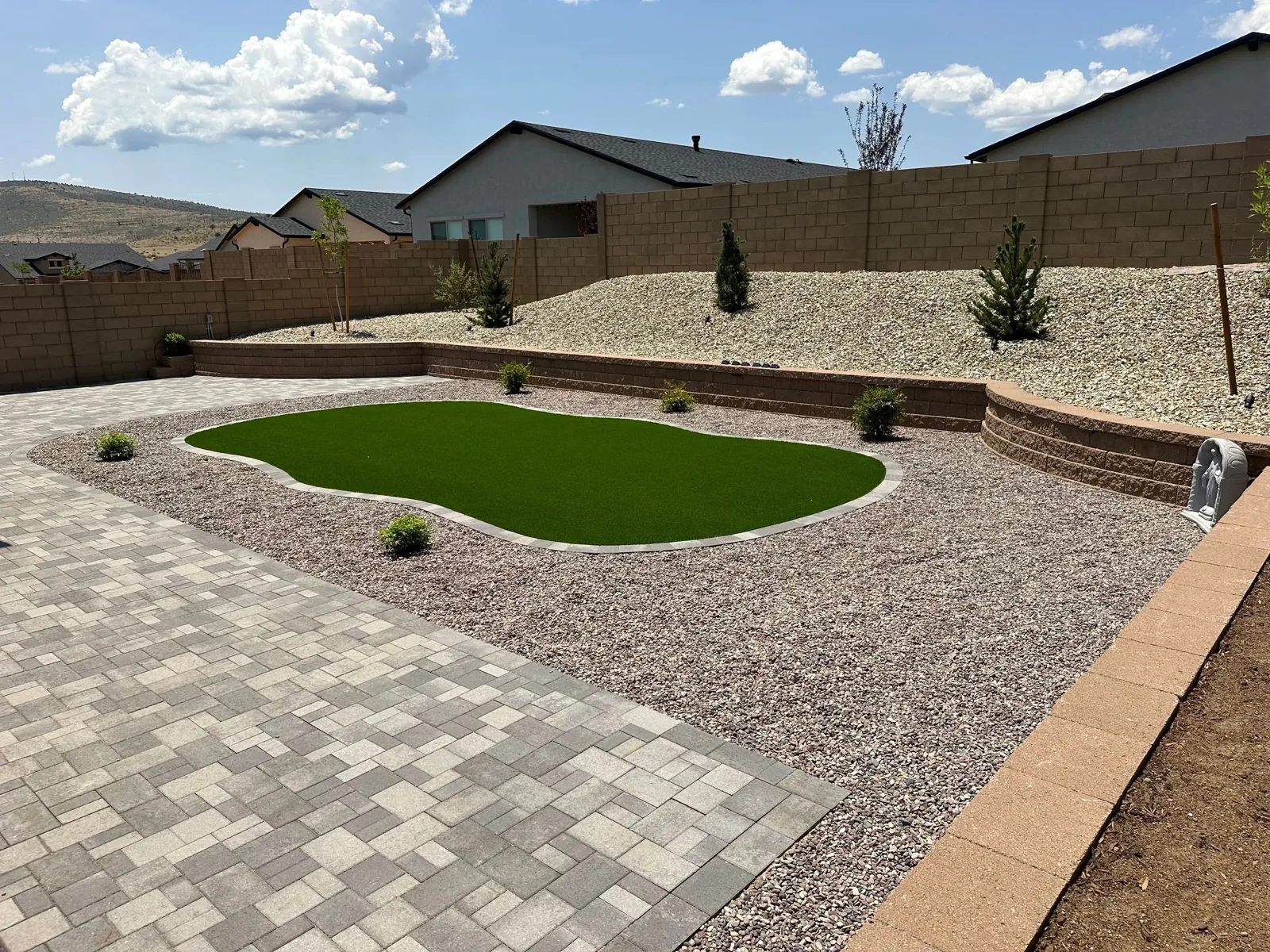
    Paver patio, block planter wall and gravel beds creating fuel breaks around a Prescott Valley home
    Block walls, gravel beds and a paver patio separate planted areas so fire has no continuous path toward the house.

    Zone 3: the outer property (30 to 100 feet)

    Larger lots in Chino Valley, Dewey-Humboldt and the hills around Prescott often extend into native brush. Out here the objective is not a manicured yard but a forest or shrubland that burns on the ground instead of in the treetops.

    • Remove dead material. Fallen branches, dead shrubs and accumulated needles are the easiest fuel to eliminate and the most dangerous to leave.
    • Break up thickets. Thin dense stands of brush so individual plants stand apart rather than forming a continuous mat.
    • Separate canopies. NFPA guidance suggests about 12 feet between tree crowns from 30 to 60 feet out, tapering to roughly 6 feet between 60 and 100 feet.
    • Clear ladder fuels. Shrubs and small trees growing under larger trees act as rungs that lift flame into the canopy. Remove them or limb the larger tree higher.
    • Dispose of debris properly. Chip it and spread it thinly far from the house, haul it to a green waste facility, or follow local burn rules if burning is allowed.

    Steep, rocky ground can make this work slow. If the slope is too much to handle safely, our yard maintenance crew can take on clearing and hauling so the job gets done before the dry season.

    Which landscape materials hold up best?

    Every surface in your yard either adds fuel or removes it. The table below compares common choices from a fire point of view only, so you can decide where each belongs.

    Material Ember resistance Best placement Notes
    Crushed rock, cobble High Immediate zone and paths Does not burn; easy to rake debris off
    Decomposed granite High Walkways, seating areas Compacts into a firm, mineral surface
    Concrete pavers, flagstone High Patios, entries, wall bases Creates wide, durable firebreaks
    Composted fine mulch Low to moderate Outer beds beyond 5 feet Smolders less than coarse bark but still burns
    Shredded bark, pine straw Low Avoid near structures Catches embers easily and carries fire
    Rubber mulch Low Avoid near structures Ignites and burns hot once lit
    Artificial turf Moderate Open areas away from walls Does not carry flame like dry grass, but embers and hot coals can melt or scorch it

    A mix usually works best: mineral surfaces near the house, spaced and irrigated planting in the middle ring, and thinned native vegetation farther out. Defensible space is about layering these choices, not paving the whole lot.

    Fences, decks and fire features

    Where fences meet the house

    A wooden fence that connects to your wall works like a wick, leading flame straight to the siding. Firewise guidance recommends replacing at least the last five feet of fence nearest the house with a noncombustible section such as metal, masonry or block. Many homes in Prescott Valley already have block perimeter walls, which is a real advantage; keep the base of those walls clear of tumbleweeds and leaf drifts that pile up after windy days.

    Decks and the space beneath them

    The area under a deck is one of the most common ember traps. Enclose it with fine metal mesh or keep it completely clear, and lay gravel or pavers underneath instead of letting weeds and debris build up. Store nothing combustible below the deck boards.

    Fire pits and outdoor fireplaces

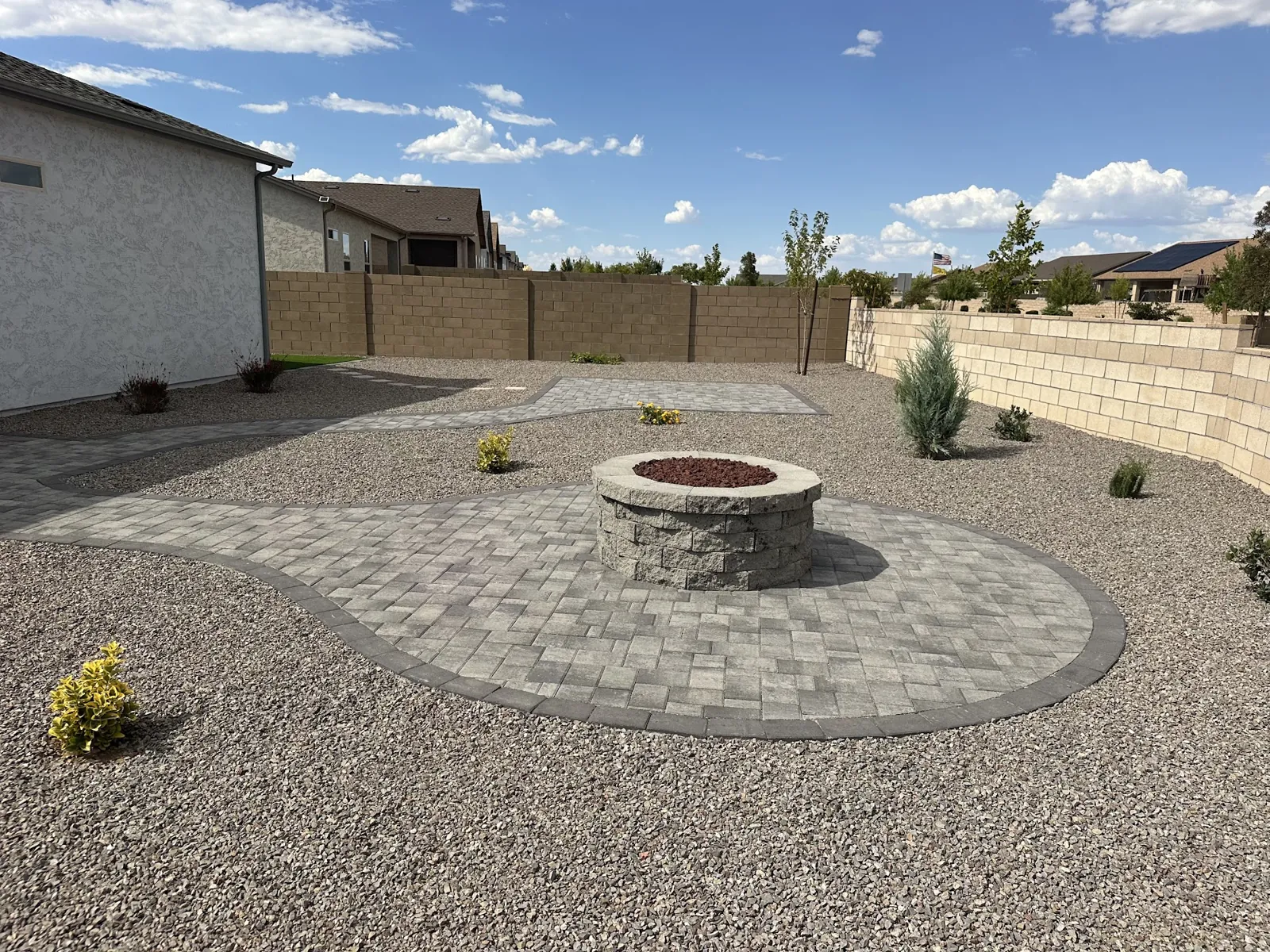
    An outdoor fire feature can be part of a fire-smart yard if it is designed responsibly. Set it on a wide paver or stone pad, keep the surrounding area clear of overhanging branches, and leave plenty of open, noncombustible space around the seating. Always follow local burn restrictions, which tighten during dry, windy periods, and keep a hose or extinguisher within reach. Our fire pit and outdoor living builds start with that kind of clearance planning.
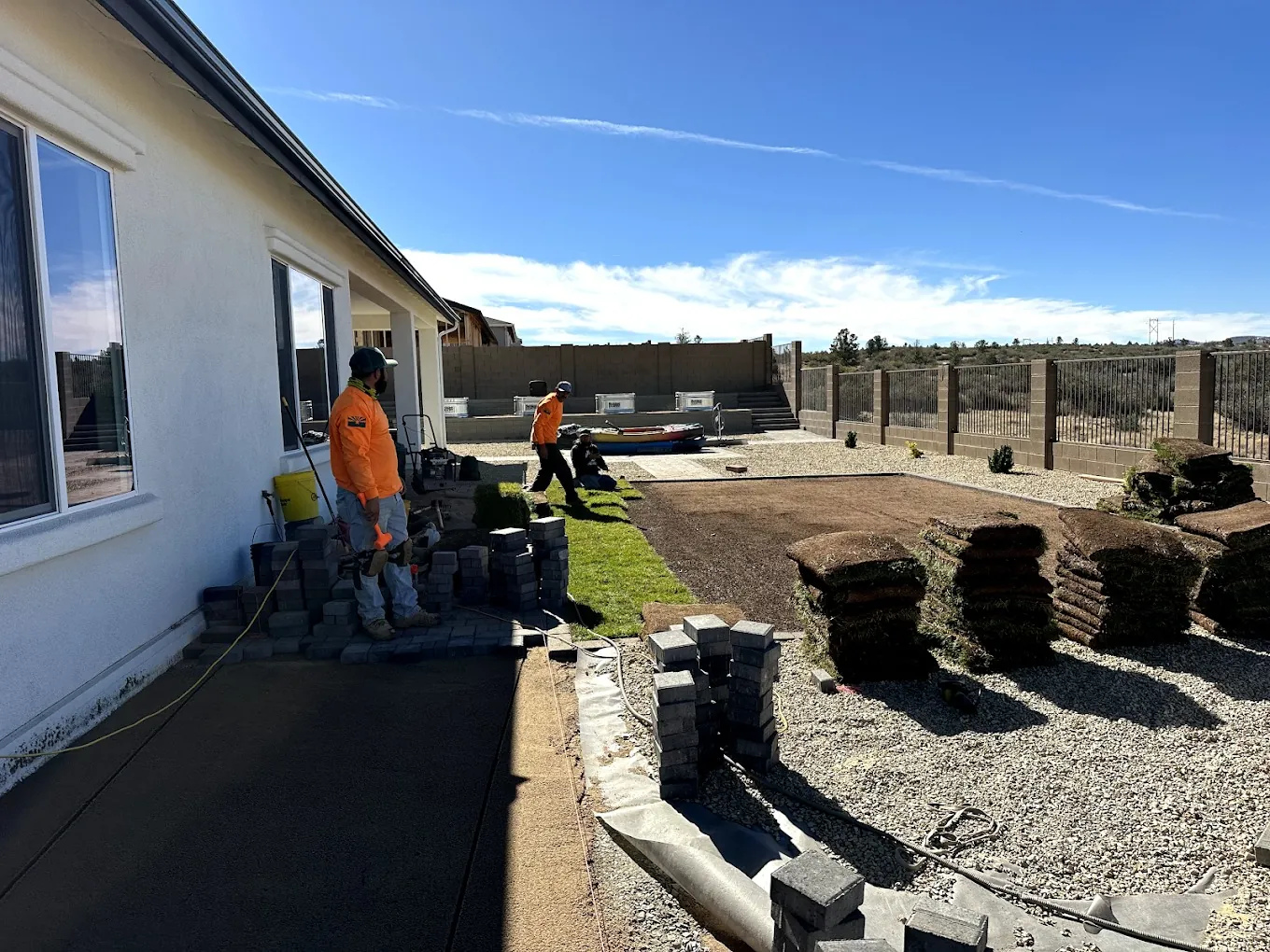
    Landscaping crew building block walls and hardscape to create defensible space beside a home
    Block walls and hardscape installed close to the home replace combustible material with surfaces that resist embers.

    A fire-season maintenance calendar

    Defensible space fades if nobody tends it. Plants grow back, needles fall, and wind stacks debris against walls. Tie your upkeep to the local seasons and it becomes routine.

    1. Late winter (February to March): Prune trees while they are dormant, remove dead shrubs, and plan any hardscape changes so installation finishes before the dry season.
    2. Early spring (April): Clear gutters and roofs, rake the five-foot strip, cut back cured grasses, and move firewood away from the house.
    3. Peak dry season (May to June): Walk the property weekly after windy days, clear new debris, check irrigation for leaks or dead zones, and keep grass mowed short.
    4. Monsoon (July to September): Watch for fast regrowth after rain and trim it back before it dries out again in fall.
    5. Fall (October to November): Collect leaf drop and pine needles, especially from gutters and deck corners, before winter winds scatter them.

    Keep an eye on National Weather Service Flagstaff red flag warnings for the Prescott area. Those days call for an extra check of the immediate zone and for skipping anything that throws sparks, from mowing over rocks to grinding metal.

    Firewise yards across Prescott and the quad-city area

    Conditions shift noticeably across the region. In the higher, more wooded neighborhoods of Prescott, pine needles and oak leaves accumulate quickly, and steep lots make spacing and pruning the top priorities. In Prescott Valley, many homes sit on smaller lots surrounded by block walls, so the immediate zone and wind-blown debris along those walls deserve most of the attention. Out in Chino Valley and Dewey-Humboldt, larger parcels of grassland and brush make the extended zone and grass height the bigger concern.

    Working with neighbors

    Embers ignore property lines. If your neighbor’s yard is a tangle of dry brush ten feet from your wall, your own work only goes so far. The Firewise USA program gives neighborhoods a framework: residents form a small committee, complete a risk assessment, build an action plan and log their annual work. Arizona’s Department of Forestry and Fire Management and the federal Ready.gov wildfire page both offer planning resources that pair well with yard work.

    Want a second set of eyes on your defensible space?

    We can walk your property, point out where embers would find fuel, and lay out hardscape, gravel and planting changes that protect the house without making the yard feel stark. Phone the office at (928) 848-0706 or use our contact form to book a free walkthrough. We are a licensed Arizona contractor (ROC 336502), fully bonded and insured.

    Firewise landscaping in Prescott: frequently asked questions

    What does “firewise landscaping” actually mean?

    It is a way of designing and maintaining a yard so it resists wildfire. The approach comes from the NFPA Firewise USA program and focuses on three distance zones around the home, keeping the closest five feet free of anything that can burn, separating plants so fire cannot travel continuously, and maintaining that layout every year before the dry season.

    Why is the first five feet around a house so important?

    Embers often travel ahead of a wildfire and land right against the home, collecting in corners, along walls and under decks. If that strip contains bark mulch, dry plants or stored firewood, a small spot fire can start and spread into vents or siding. Keeping it noncombustible removes the most common way homes ignite.

    Is it safe to use bark mulch anywhere in a firewise yard?

    Yes, with limits. Keep coarse bark, pine straw and rubber mulch out of the zone within five feet of the house, deck and fences. Farther out, a thin layer of fine composted mulch around irrigated plants is a reasonable compromise. Rock, cobble and decomposed granite remain the safer choice wherever embers are likely to land.

    What are ladder fuels?

    Ladder fuels are low branches, shrubs and small trees that bridge the gap between the ground and a tree’s canopy. A grass fire that reaches them can climb into the crown, where it spreads faster and throws more embers. Pruning lower limbs and removing understory brush beneath larger trees cuts those rungs out of the ladder.

    How far apart should trees be for defensible space?

    NFPA Firewise guidance suggests roughly 18 feet between tree crowns in the 5 to 30 foot zone, about 12 feet between crowns from 30 to 60 feet, and around 6 feet from 60 to 100 feet. Steeper slopes call for wider spacing because fire runs uphill faster. Existing mature trees can often stay if you prune and clear beneath them.

    Can I keep a wood fence if I live in a wildfire area?

    Often yes, but change the section that touches the house. Firewise recommendations call for at least the last five feet of fence attached to the home to be noncombustible, such as metal, block or masonry. That gap stops the fence from leading flame directly to your walls. Also keep weeds and windblown debris cleared from the fence base.

    Does synthetic grass belong in a yard exposed to wildfire risk?

    It can be, in the right spot. Synthetic turf does not carry fire the way cured native grass does, but hot embers or coals can melt or scorch it. Use it in open areas set back from walls, keep a mineral border between turf and the house, and avoid placing it right beside an open fire feature.

    When is the best time to do firewise cleanup around Prescott?

    Aim to finish major pruning and clearing in late winter and early spring, before the dry, windy weeks of May and June. Then keep up lighter checks through early summer, after monsoon regrowth, and again in fall when leaves and needles drop. A short walk around the house after each windy day catches new debris.

    How does a neighborhood become a Firewise USA site?

    Residents organize a small board or committee, work with fire officials or a state forester on a community wildfire risk assessment, write a multi-year action plan, and hold at least one educational event. Each year the group invests in risk-reduction work and reports it to NFPA to keep the recognition active. The program’s website explains each step.

    Will firewise landscaping make my home fireproof?

    No yard can guarantee a house will survive a wildfire. Firewise landscaping improves the odds by removing the fuel embers need and by slowing any fire that approaches, which also gives firefighters a safer place to defend. Pair it with structure upgrades such as ember-resistant vents, clean gutters and a well-maintained roof for the strongest protection.
  • Drought-Tolerant Plants, Prescott AZ: A High-Desert Planting Guide

    Drought-Tolerant Plants, Prescott AZ: A High-Desert Planting Guide

    The drought tolerant plants Prescott AZ yards need are ones that can take a hard winter freeze, a bone-dry spring and a soaking summer monsoon in the same year. Blue grama grass, Apache plume, cliffrose, pointleaf manzanita, penstemons, Parry’s agave, red yucca and desert willow all fit that pattern, as long as they are planted in fast-draining soil and watered deeply while they establish.

    Key takeaways

    • Prescott sits around 5,400 feet, so “desert plants” chosen for Phoenix often die here in the first January. Cold hardiness matters as much as drought tolerance.
    • About 16.5 inches of precipitation falls in a typical year, and most of it arrives in winter storms and the July to September monsoon. May and June are the driest months, which is when new plants struggle most.
    • Early fall is the most forgiving planting window for hardy natives. Frost-tender plants should wait until after the average last freeze, around the start of May.
    • Even the toughest plant needs regular deep watering for its first one to two summers. After that, water less often but more deeply.
    • Grouping plants by water need, on separate drip zones, is the single biggest step toward a yard that stays green on very little water.

    What makes Prescott’s high desert hard on plants?

    When people hear “Arizona,” they picture saguaros and palm trees. Prescott is a different world. The city sits in the Bradshaw Mountains at roughly 5,400 feet, and Prescott Valley is only a few hundred feet lower. That elevation gives us four real seasons, and every one of them tests a plant in a different way.

    Winter brings regular hard freezes. On average, freezing temperatures can show up any time from about late October until the first days of May. Snow falls most winters, usually a light total of around ten inches across the season, and it tends to melt within a day or two. The bigger danger is the swing between day and night. Our daily temperature range averages close to 30 degrees, so a plant can sit in sunshine at 55°F in the afternoon and then drop into the low 20s before sunrise. Plants that are not built for that kind of whiplash crack, brown out or simply never wake up in spring.

    Spring is the hidden killer. April, May and June are the driest stretch of the year, and June often brings less than a quarter inch of rain. Wind adds to the stress. A plant that came through winter fine can dry out completely in May if nobody is watching the irrigation.

    Then the North American monsoon arrives. July and August are the wettest months of the year here, each averaging close to three inches of rain, much of it in short, heavy bursts. Plants that hate wet feet can rot if the soil around them holds water. So a good Prescott plant has to handle cold, drought and sudden downpours, often within a few months of each other.

    Summer heat itself is less of a problem than many newcomers expect. A typical year has around 44 days at 90°F or warmer, but 100°F days are rare, only one or two a year on average. That is why many low-desert favorites that thrive on heat but cannot handle cold are poor choices for us, while plants from the Colorado Plateau, the Great Basin and the mountains of New Mexico often do beautifully.

    How do you read your yard before you buy plants?

    Before choosing a single plant, spend some time looking at the yard you actually have. Two homes on the same street can have very different growing conditions, and matching the plant to the spot is far cheaper than replacing it next year.

    Sun and exposure

    South- and west-facing walls bounce heat back onto plants and stay warmer in winter. They suit agaves, yuccas and sun-loving perennials. North-facing beds stay shaded and cold for weeks after a snow, so they are a better home for shrubs like manzanita and cliffrose that tolerate cooler roots. East-facing spots, with gentle morning sun and afternoon shade, are the most forgiving place for plants that are new to you.

    Wind and cold pockets

    Cold air flows downhill and settles in low spots, just like water. If your yard has a dip, a drainage path or the bottom of a slope, expect it to be several degrees colder on still winter nights. Save your toughest, most cold-hardy plants for those areas. Windy, open lots in Prescott Valley and Chino Valley dry plants out faster, so give new plantings some shelter from a wall, a boulder or larger shrubs where you can.

    Soil and drainage

    Much of the Prescott area has soil weathered from granite, the same rock you see in the Granite Dells. It is coarse, gritty and low in organic matter, and it usually drains well, which most drought tolerant plants love. Some lots have pockets of clay or a compacted layer left behind by construction equipment, and those spots can hold water for days after a monsoon storm.

    A simple drainage test tells you a lot. Dig a hole about a foot deep, fill it with water, let it drain, then fill it again and watch how long the second fill takes to disappear. If the water is gone within a few hours, almost any plant on our list will be happy. If it is still sitting there the next morning, either choose plants that tolerate heavier soil or plant on a slight mound so the crown sits above the wettest zone.

    Your hardiness zone

    The Prescott area falls roughly in USDA zones 7b to 8a, depending on elevation and exactly where you live. You can confirm your own zone by entering your ZIP code on the USDA Plant Hardiness Zone Map. When a plant tag says “hardy to zone 8,” treat that as borderline here, and put it in a warm, protected spot. Plants rated to zone 7 or colder are a safer bet across most of the area.

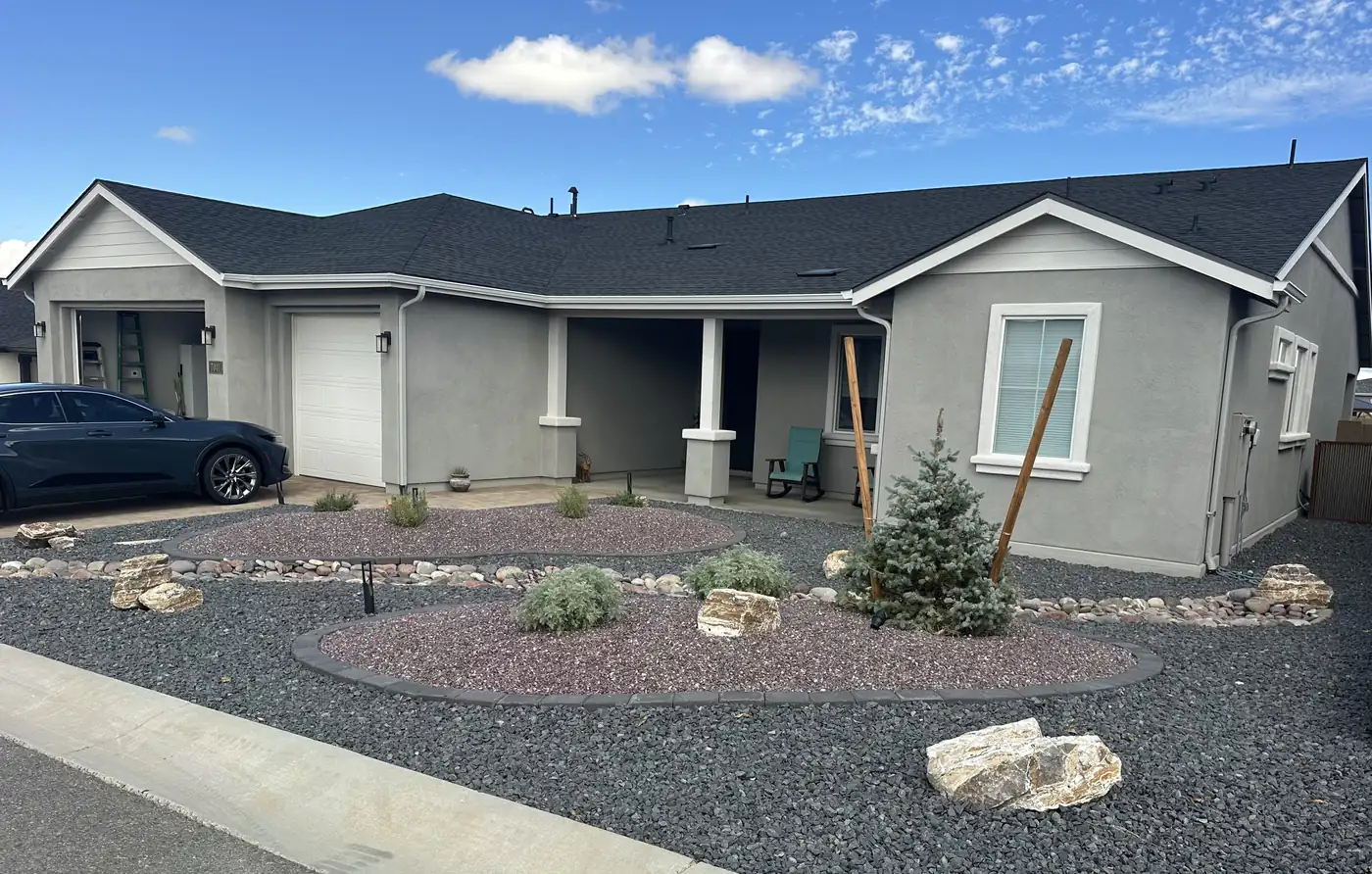
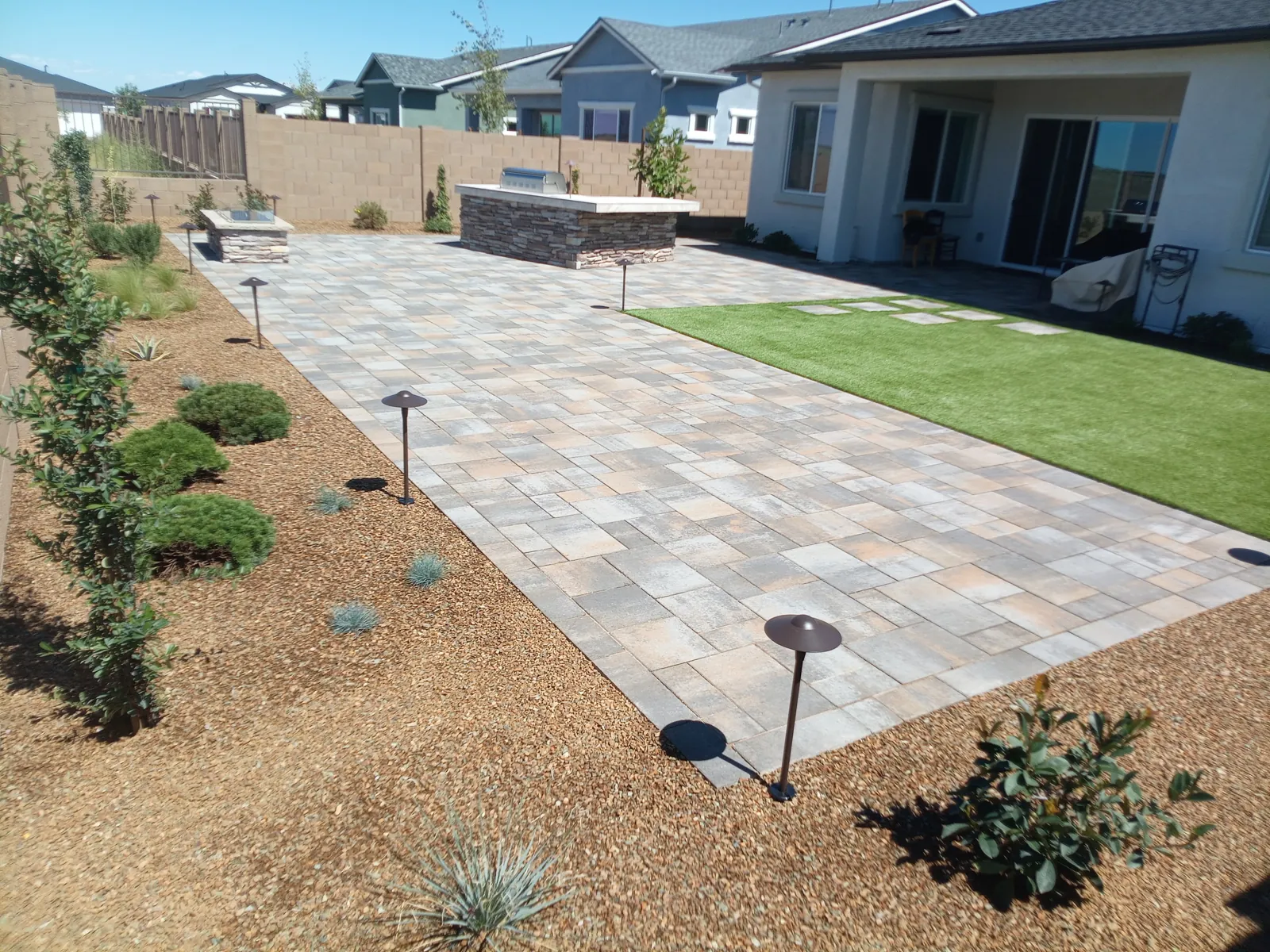
    Drought tolerant plants Prescott AZ homeowners can use, planted in gravel beds beside a paver patio with landscape lights
    Low-water shrubs and perennials set in gravel beds along a patio we built. Warm, sunny edges like this suit heat-loving desert plants.

    Drought tolerant plants Prescott AZ gardeners can count on

    The plants below are ones that handle our cold winters, our dry springs and our monsoon rain when they are sited well. This is not a complete list. Your local nursery and the University of Arizona Cooperative Extension office in Yavapai County are both good sources for more options suited to your exact elevation.

    Plant Type Size (typical) Why it works here Best spot
    Blue grama grass Native bunchgrass 1–2 ft Very cold hardy, greens up with summer rain, eyelash-shaped seed heads Full sun, open areas, slopes
    Apache plume Native shrub 3–6 ft White spring flowers followed by feathery pink seed plumes; shrugs off cold and drought Full sun, informal borders
    Cliffrose Native evergreen shrub 4–8 ft Fragrant cream flowers in spring, evergreen all winter Full sun to light shade, screens
    Pointleaf manzanita Native evergreen shrub 3–6 ft Smooth red bark and small pink-white flowers; part of local chaparral Well-drained, slopes, little summer water once established
    Penstemons Perennial 1–3 ft Tall flower spikes that draw hummingbirds in spring Full sun, lean gritty soil
    Rubber rabbitbrush Native shrub 3–5 ft Bright yellow flowers in fall when little else blooms Full sun, tough open ground
    Parry’s agave Succulent 2 ft tall, 2–3 ft wide One of the most cold-tolerant agaves; native to Arizona’s mountains Sunny, fast-draining bed or mound
    Red yucca Succulent-like perennial 3 ft clumps, taller flower stalks Coral flower spikes all summer, handles cold and reflected heat Hot walls, driveways, sunny beds
    Desert willow Small deciduous tree 15–25 ft Orchid-like flowers through summer, light shade, low water once established Full sun, specimen or patio tree

    Grasses

    Blue grama is one of the most useful plants for a Prescott yard. It is a warm-season bunchgrass, which means it stays tan through winter and turns green once warm weather and monsoon rains arrive. Its seed heads stick out sideways like little eyebrows and catch the late-afternoon light. Plant it in drifts on slopes, along paths or as a soft, unmowed meadow. Deer grass is another good option where you want a larger, fountain-shaped clump with more presence.

    Shrubs

    Apache plume is a native shrub with small white rose-like flowers in spring. They are followed by fuzzy pinkish seed heads that glow when backlit. It is open and airy rather than dense, so it works well in informal, natural-looking beds. Cliffrose is evergreen, with small dark leaves and a strong, sweet scent when it flowers. Be aware that deer like to browse it, so young plants may need a wire cage for the first couple of years.

    Pointleaf manzanita grows wild in the chaparral around Prescott. Its smooth mahogany bark is beautiful in winter light, and it flowers in late winter or early spring. The trick with manzanita is drainage and restraint. It wants gritty soil and very little summer water once established, and it is one of the plants most often killed by kindness. Rubber rabbitbrush fills the late-season gap with masses of yellow flowers in fall, and it is about as tough as a shrub can be, although it can seed itself around if you let it.

    Perennials and groundcovers

    Penstemons are a large group of flowering perennials, and several species do well in Prescott, including firecracker penstemon with its red tubular flowers and Palmer’s penstemon with taller pink spikes. They prefer lean soil and dislike rich compost or constant overhead watering. Many are short-lived, but they reseed in gravel, so a small planting often turns into a lasting colony. Blackfoot daisy and Angelita daisy are small native groundcover perennials that flower for months and stay neat along path edges.

    Succulents and accent plants

    Parry’s agave is native to the mountains of central Arizona and handles cold far better than most agaves sold in big-box stores. It forms a tight, symmetrical blue-gray rosette and slowly produces offsets around its base. Like most agaves, it flowers once after many years, sending up a tall stalk, and the mother plant then dies while the pups carry on. Red yucca is not a true yucca, but it looks like one, with long, narrow leaves and arching coral flower stalks that hummingbirds visit all summer. It is a good choice for hot spots next to driveways and walls where softer plants burn.

    Small trees

    Desert willow is a small, often multi-trunked tree with orchid-like pink, purple or white flowers from late spring through summer. It is not a true willow, and it does not need the water a willow needs. Expect it to leaf out later in spring than other trees, which sometimes makes new owners think it has died. Give it until late May before you worry. It casts light, filtered shade, which makes it a good choice near a patio or in a bed where you still want sun to reach plants underneath.

    When should you plant in Prescott?

    Timing affects survival as much as plant choice does. In general, you want new roots growing in cool weather with some natural moisture, not trying to get started during the dry heat of June.

    Early fall: the best window for hardy plants

    September through mid-October is the most forgiving time to plant cold-hardy shrubs, grasses and perennials. The soil is still warm from summer, so roots keep growing, while the air is cooling and evaporation drops. Winter storms then add moisture, and by spring the plant has a head start before the dry season arrives. Most of the natives on our list establish best when planted at this time of year.

    Spring: after the last freeze

    The average freeze season in Prescott ends around the first of May, but a late frost can still happen after that. Frost-tender plants and anything rated borderline for our zone should wait until the forecast looks reliably frost-free. You can check the latest local outlook from the Flagstaff forecast office of the National Weather Service, whose coverage includes the Prescott area. Spring plantings need careful watering, because they head straight into the driest months of the year.

    Monsoon planting

    Planting in July or early August can also work, since monsoon storms supply extra moisture and humidity. The risk is that heavy rain can wash out new beds, and some years the monsoon arrives late or falls short. If you plant during the monsoon, keep the drip system running and be ready to water by hand if the storms skip your neighborhood.

    What to avoid

    Late May and June are the hardest months to start new plants. Planting in December and January is also risky for anything except the very toughest natives, since frozen soil stops root growth and the plant can dry out without being able to take up water.

    How do you plant so the roots actually establish?

    A drought tolerant plant only becomes drought tolerant once its roots have spread well beyond the original root ball. These steps give it the best chance:

    1. Water the plant in its pot the day before planting so the root ball is evenly moist.
    2. Dig wide, not deep. Make the hole two to three times as wide as the root ball but only as deep as the pot. Roughen the sides of the hole so roots can push into the surrounding soil.
    3. Set the plant slightly high. The top of the root ball should sit level with or just above the surrounding grade. Agaves, manzanita and other plants that hate wet crowns do best on a slight mound.
    4. Backfill with native soil. For most desert-adapted plants, skip heavy compost. Rich backfill can make roots circle inside the hole instead of growing outward, and it can hold too much water during the monsoon.
    5. Loosen circling roots. If roots wrap around the outside of the root ball, tease them apart or make a few shallow vertical cuts so they grow outward.
    6. Build a shallow watering basin just beyond the edge of the root ball, then water slowly until the whole area is soaked.
    7. Add mulch. A layer of gravel or decomposed granite around the base helps keep moisture in and weeds down. Keep it a few inches away from the stem.
    8. Protect from critters. Rabbits, deer and javelina all live around Prescott. A simple wire cage for the first season or two can save a young plant.
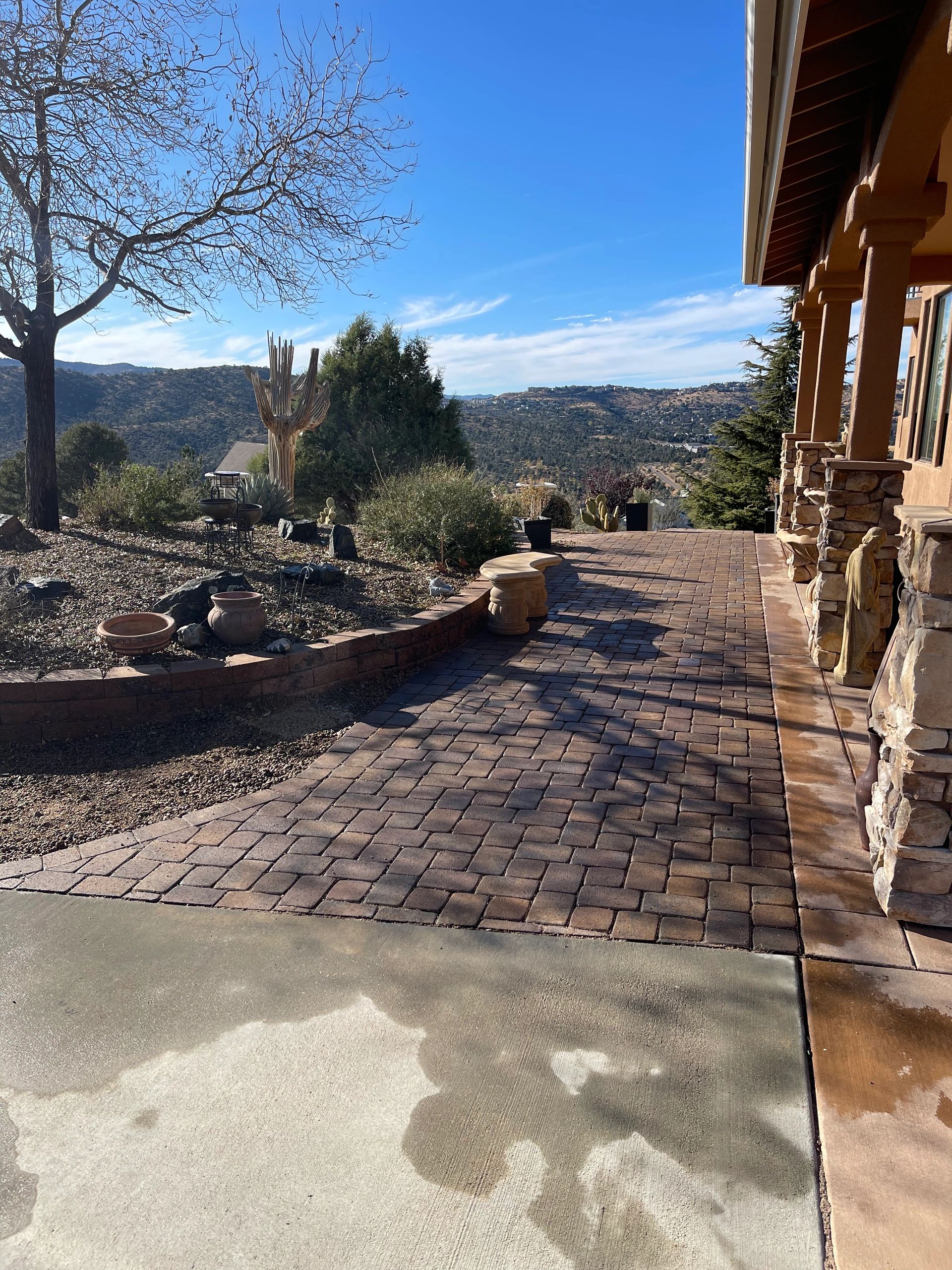
    Desert rock garden with low-water shrubs and boulders in a Yavapai County yard
    Boulders and gravel keep roots cool and help water soak in around low-water plants instead of running off.

    How much water do new plants need?

    This is where most new plantings succeed or fail. A plant labeled “drought tolerant” still needs regular water while its roots grow. The aim is to water deeply and then let the top of the soil dry before the next watering, so roots follow the moisture down and out.

    Exact amounts depend on plant size, soil, sun and weather, so treat the schedule below as a starting point and check the soil with a finger or a long screwdriver before each watering.

    Stage Typical frequency (warm months) Typical frequency (cool months) Goal
    First 2–3 weeks Every 2–3 days Every 4–7 days Keep the root ball moist while roots reach the native soil
    Rest of first season Every 4–7 days Every 10–14 days Water deeper and less often to pull roots outward
    Second year Every 7–14 days Every 3–4 weeks, or rely on storms Build a wide root system that can handle dry spells
    Established (year 3+) Every 2–4 weeks in dry spells, less during the monsoon Occasional deep watering in long dry winters Survive mostly on natural rainfall with backup

    Each watering should soak the full root zone. For small perennials that might mean the top 12 inches of soil. For shrubs, aim for about 18 to 24 inches, and for trees, deeper still. A slow, long drip cycle does this much better than a quick spray.

    Turn the frequency down once monsoon storms start soaking the ground in July. Many overwatered plants die in August, not June, because the timer kept running while the clouds were doing the work. Then turn it back up in September if the rains taper off early, and remember that a dry, sunny winter still calls for an occasional deep watering, especially for evergreens.

    Why grouping plants by water need saves the most water

    The most common irrigation problem we see is a single drip zone feeding everything from thirsty roses to agaves. To keep the roses alive, the zone runs too often, and the agaves rot. The fix is called hydrozoning: grouping plants with similar water needs together and putting each group on its own valve.

    • Very low water: agaves, red yucca, rabbitbrush and established manzanita. These may need water only during long dry spells once established.
    • Low water: Apache plume, cliffrose, blue grama, penstemons and desert willow. They need regular deep watering at first, then occasional summer water.
    • Moderate water: anything that is not desert-adapted, along with vegetable beds and container plants. Keep these near the house where you see them often, and on their own zone.

    The EPA WaterSense guidance on what to plant makes the same point: choosing plants suited to your region and grouping them by need does more than any gadget to cut outdoor water use. If your yard already has drip lines, it is often possible to split an existing zone or re-route emitters rather than starting from scratch. Our irrigation and xeriscaping team does this kind of rework regularly.

    Emitter size matters too. A small perennial may only need one low-flow emitter. A shrub usually needs two or more placed at the edge of the root ball, and those emitters should be moved outward as the plant grows. Trees need a ring of emitters well out from the trunk, because that is where the feeder roots spread.

    Mistakes that kill even tough plants

    Most failed desert plantings are not caused by bad plants. They come from a few avoidable habits:

    • Buying for Phoenix. Many plants sold statewide are rated for the low desert. If the tag lists zone 9 or warmer, it will probably struggle through a Prescott winter.
    • Watering on a fixed schedule all year. A timer set in June and never touched again will drown plants during the monsoon and over-water them all winter.
    • Shallow, frequent sprinkles. Five minutes a day keeps roots near the surface, where they cook in summer and freeze in winter.
    • Burying the crown. Planting too deep, or piling gravel against stems, invites rot after heavy rain.
    • Heavy fertilizer. Rich feeding pushes soft, leggy growth that cold and wind damage easily. Most natives prefer lean soil.
    • Pruning at the wrong time. Heavy cutting in late summer encourages tender new growth right before the first freeze. Major shaping is usually best done in late winter or early spring, after the worst cold has passed.
    • Crowding. A one-gallon Apache plume looks small in the nursery but can spread six feet across. Space plants for their mature size and fill gaps with gravel, boulders or short-lived perennials while they grow.

    If a planting is already struggling, our yard maintenance crew can check emitters, adjust timers and replace plants that were never right for the spot.

    High desert garden with gravel, boulders and low-water shrubs spaced for their mature size
    Plants spaced for their full size, with gravel and boulders filling the gaps while they grow.

    Planting notes for Dewey-Humboldt, Chino Valley, Prescott Valley and Prescott

    Growing conditions can change a surprising amount from one town to the next, sometimes within a few miles.

    Prescott. Higher neighborhoods, especially those closer to the forest edge, see colder nights and more snow than lower parts of town. Granite soils, rocky slopes and shade from pines and oaks are common. Manzanita, cliffrose and blue grama feel right at home here. Sloped lots often need terraced beds, and our retaining wall work frequently creates the level planting pockets these plants need. See our Prescott landscaping page for more on how we approach yards there.

    Prescott Valley. Many homes sit on flatter, more open lots with block-wall backyards that heat up in the afternoon. Walls reflect heat onto beds and can shelter plants from wind, which gives you more choices along south-facing edges. Our office is here, and our Prescott Valley landscaping page shows the kind of work we do nearby.

    Chino Valley. Lower in elevation but more exposed, Chino Valley properties tend to be larger and windier. Tough, spreading shrubs like Apache plume and rabbitbrush cover ground efficiently on big lots, and drip lines need to be planned for long runs. Visit our Chino Valley landscaping page for more.

    Dewey-Humboldt. Lots here often feel rural, with native vegetation all around. Matching the surrounding landscape with native grasses and shrubs helps a new yard blend in and keeps watering to a minimum. Our Dewey-Humboldt page covers what works well in that area.

    For anywhere else in the county, our service areas page lists everywhere we work.

    Want a planting plan built for your yard?

    We pick plants for the conditions your property actually has, then lay out drip zones so each group gets the water it needs and no more. Every project starts with a free estimate. Call (928) 848-0706 or share some photos and rough measurements, and we will set up a time to walk the yard with you. Our planting and irrigation work carries the protection of Arizona contractor license ROC 336502, with bond and insurance coverage in place. Want to see finished work first? Browse our project gallery or read about our landscape design process.

    Frequently asked questions

    When is the best time of year to plant drought-tolerant shrubs in Prescott?

    Early fall, from September to mid-October, is usually best for cold-hardy shrubs. The soil is still warm, so roots keep growing, while cooler air reduces water loss. Winter moisture then helps the plant settle in before the dry spring. Spring planting works too, but wait until frost risk has passed and plan on careful watering through May and June.

    How often should I water a new low-water plant during its first summer?

    For the first two to three weeks, water every two to three days so the root ball never dries out. After that, stretch it to every four to seven days, soaking the root zone each time. Cut back once monsoon rains are soaking the ground, and always check soil moisture with your finger before watering. The goal is deep, infrequent water.

    Will agaves survive a Prescott winter freeze?

    Some will and some will not. Parry’s agave is native to Arizona’s mountains and handles our winters well when planted in fast-draining soil. Many agaves sold for low-desert gardens are much less cold-hardy and can turn to mush after a hard freeze. Check the hardiness rating, plant on a slight mound and keep the crown dry in winter.

    Which ornamental grasses handle cold winters and dry springs?

    Blue grama is one of the most reliable. It is native, very cold hardy and greens up when summer rains arrive. Deer grass forms a larger fountain-shaped clump and also does well locally. Avoid grasses known to spread aggressively into wild land, and ask your nursery which ornamental grasses are considered invasive in Arizona before you buy.

    Is desert willow hardy enough for the Prescott area?

    Desert willow generally handles Prescott and Prescott Valley winters well, especially in a sunny, sheltered spot. It is one of the last trees to leaf out in spring, often not until May, so do not assume it died over winter. Give it deep water while young, then only occasional summer watering once it is established.

    Should I add compost to granite soil before planting native shrubs?

    For most native and desert-adapted shrubs, no. Granite-based soil drains well, which these plants prefer. Rich compost in the planting hole can hold too much water during the monsoon and make roots stay inside the hole instead of spreading out. Backfill with the soil you dug out, and save compost for vegetable beds and thirstier plants.

    Do drought-tolerant plants need fertilizer?

    Usually very little, if any. Most natives evolved in lean soil and grow soft, leggy and cold-sensitive when fed heavily. If a plant looks pale or stunted after its first year, check watering and drainage first, since those are far more common problems. A light, slow-release feeding in spring is plenty for the few plants that need it.

    How far apart should I space shrubs like Apache plume or cliffrose?

    Space them for the size they will reach, not the size of the pot. Apache plume can spread five or six feet across, and cliffrose can grow larger still. Plant them roughly that far apart from center to center. The yard will look sparse for a season or two, so fill the gaps with gravel, boulders or quick perennials that you can remove later.

    Can low-water plants grow in containers on a Prescott patio?

    Yes, but containers dry out and freeze faster than the ground does. Pick plants rated at least one zone colder than your area, use a gritty, fast-draining potting mix and large pots that hold more soil. Container plants need water more often than the same plants in the ground, and pots on a hot south-facing patio may need watering several times a week.

    How can I tell if a desert plant is getting too much water?

    Overwatered desert plants often show yellowing leaves that start at the base, soft or blackened stems, a mushy crown on agaves and yuccas, or sudden wilting even though the soil is wet. Dig down a few inches near the plant. If the soil stays damp days after watering, cut back the schedule or move the plant to better-drained ground.