
Landscaping FAQ, Prescott AZ & Yavapai County
Straight answers to the questions homeowners ask us most, from the first estimate to seasonal upkeep.
What does this landscaping FAQ for Prescott, AZ cover?
This landscaping FAQ Prescott AZ homeowners can rely on answers 37 common questions in nine topics: estimates and timing, design, pavers, artificial turf, retaining walls and drainage, irrigation, outdoor living, maintenance and hiring. Each answer is short and practical, and links to the page with more detail.
- Questions answered
- 37, in nine topics
- Call
- (928) 848-0706
- Open
- Weekdays 7am–5pm; Saturdays by appointment
- Licensed
- Bonded & insured · ROC 336502
Using our landscaping FAQ: Prescott AZ topics at a glance
Questions about a yard rarely arrive one at a time. A homeowner planning a new patio usually also wonders about drainage, irrigation, plants and what the work will be like while it happens. We grouped the answers on this page by topic so you can jump straight to what matters to you, then follow the links to the service or guide that goes deeper.
Everything here reflects conditions in central Arizona's high desert: elevation above 5,000 feet, freezing nights from late fall into spring, granite-based soils and a summer monsoon that can drop most of a year's rain in a few weeks. Advice written for Phoenix or for wetter climates often needs adjusting for those facts, and we kept that in mind in every answer.
Why so many answers start with drainage and base work
You will notice a theme in the answers below. Whether the question is about pavers, turf, walls or plants, the long-term result depends on what happens below the surface: how the ground is graded, how deep and well compacted the base is, and where water goes when a storm arrives. Those details are invisible once a project is finished, which is exactly why they are worth asking about before it starts.
When you compare plans or estimates from any landscaper, look for these hidden items in writing. They are often where projects differ most, and they decide whether a yard still looks right after several winters.
- Grading that moves water away from the house
- A compacted base sized for the surface and the load on it
- Drainage behind walls and under patios
- Irrigation laid out by plant water needs
- Edging and borders that keep materials in place
Go deeper on any topic
Landscaping questions, answered by topic
Estimates, timing and the process
What happens during the free on-site consultation?
We walk the property with you and talk through how you want to use the space: entertaining, kids, pets, privacy or simply less upkeep. We note slope, sun, drainage, existing irrigation and how equipment can reach the work area, then take measurements and photos. That visit becomes the starting point for your design and written estimate, with no obligation to go ahead. Book a visit here.
Why can two landscaping quotes for the same yard be so different?
Quotes often describe different jobs. One may include a deeper compacted base, drainage work, irrigation changes, edging, haul-off and final cleanup, while another leaves some of that out or prices it later. Material grades vary too. Ask every company to list what is included line by line, and check that each one is licensed and insured before comparing the totals.
What should a written landscaping estimate spell out?
A clear estimate names the scope of work for each area, the materials and approximate quantities, any grading or drainage work, irrigation changes, cleanup and debris removal, and the expected schedule. It should also show the contractor's license number so you can look it up with the Arizona Registrar of Contractors. If something you discussed is missing, ask before you sign.
Which season is best for starting a landscaping project around Prescott?
Hardscape such as patios, walls and walkways can be built through most of the year, as long as the ground is not frozen or saturated. Planting does best in early fall or after spring frosts end, since the average freeze season runs from late October to about May 1. Many homeowners plan the design over winter so construction can start as the weather warms.
Can I stay home and use my house normally while the yard is being built?
Yes. Most families live at home during the work. We agree on access for equipment and materials, keep a clear path to your doors and garage, and ask that pets stay inside or away from open gates and trenches. Our crews work during normal business hours, Monday to Friday, and keeping walkways clear lets you use the rest of the yard while each phase is built.
Landscape design
How do I decide what my yard should include?
Start with how you want to live outside rather than with materials. List the activities you care about, such as dining, a fire feature, play space or a vegetable bed, then note what bothers you today: dust, glare, weeds or slopes. During the design process we turn that list into zones and suggest the order in which to build them.
Can you work from a photo or an idea I saved online?
Absolutely. Inspiration photos help us understand the style and colors you like. We then adapt the idea to your lot, because a yard pictured in a coastal or low-desert climate may need different plants, materials or drainage at our elevation. The goal is a design that captures the feeling of the photo and still works through a Prescott winter and monsoon season.
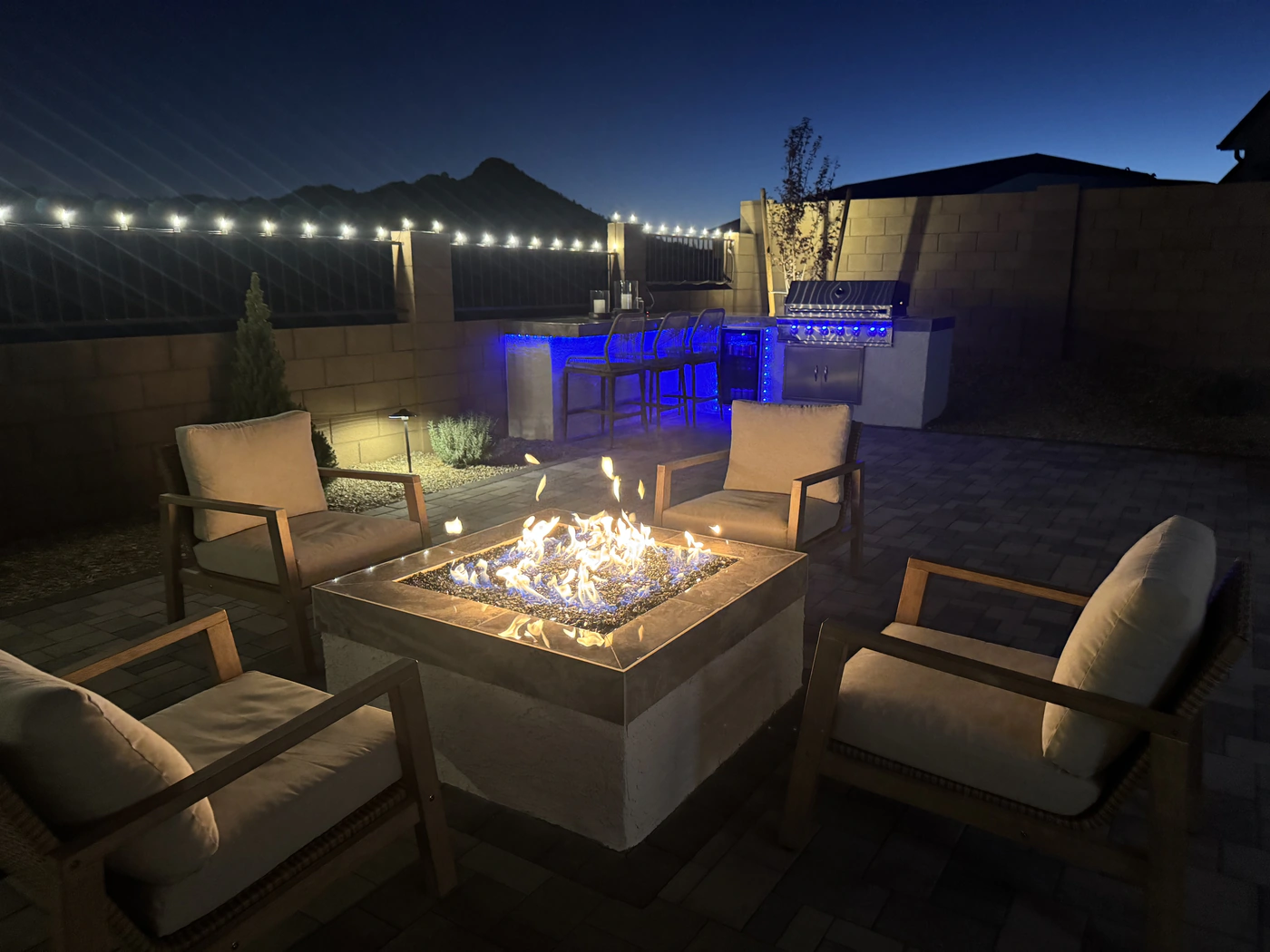
Can my design leave room for a spa, outdoor kitchen or lighting later?
Yes, and planning ahead saves money. Even if you build in phases, we can size the patio base for a future hot tub or kitchen island and place sleeves or conduit under hardscape before it is paved. Gas, electrical and plumbing hookups must be completed by appropriately licensed trades, but leaving the right space and routes now avoids tearing out finished work later.
How do you choose plants that survive cold winters at our elevation?
We look at the USDA hardiness zone for your exact address, the sun and wind exposure of each bed, and low spots where cold air settles. Then we favor species with a proven record in the high desert. The USDA zone map is a starting point, and our drought-tolerant plant guide lists dependable choices.
Pavers, patios and hardscape
What is the difference between pavers, flagstone and decomposed granite?
Pavers are manufactured units laid in a pattern over a compacted base, giving a uniform, very durable surface. Flagstone is natural stone cut in irregular slabs, with an organic look and more variation. Decomposed granite is a fine crushed rock that can be compacted into paths and patios at a lower cost but needs occasional topping up. Many yards combine all three. See our paver and hardscape page.
How long should a professionally installed paver patio last?
Longevity depends far more on what sits under the pavers than on the pavers themselves. A properly excavated, well-compacted base, firm edge restraints and good drainage let a patio ride through freeze and thaw cycles for many years. If a spot ever settles or a unit cracks, individual pavers can be lifted and reset, which is one reason they are popular here.
Can new pavers be matched to an existing patio?
Often closely, but not always exactly. Manufacturers change colors and batches over time, and existing pavers fade and weather in the sun. When matching is hard, a contrasting border or a deliberate change of pattern at the joint between old and new usually looks better than a near-miss. Ask for samples so you can compare them against your current patio in daylight.
What keeps a paver walkway level through winter?
Three things: base, edges and water. The aggregate base must be deep enough and compacted in layers, edge restraint stops the pavers from creeping outward, and the walkway needs a slight slope so snowmelt and rain drain off instead of soaking the base and freezing. Our pavers vs concrete guide explains how freeze-thaw affects each surface.
Artificial turf
How hot does artificial turf get in the summer sun?
Synthetic turf can get noticeably hotter than natural grass when it sits in direct afternoon sun, so it pays to plan for it. Prescott's summers are much milder than the low desert, yet turf in full sun can still feel warm underfoot. Placing turf where it gets some afternoon shade, choosing a cooler infill and rinsing it on hot days all help.
Is artificial turf a good option for dogs?
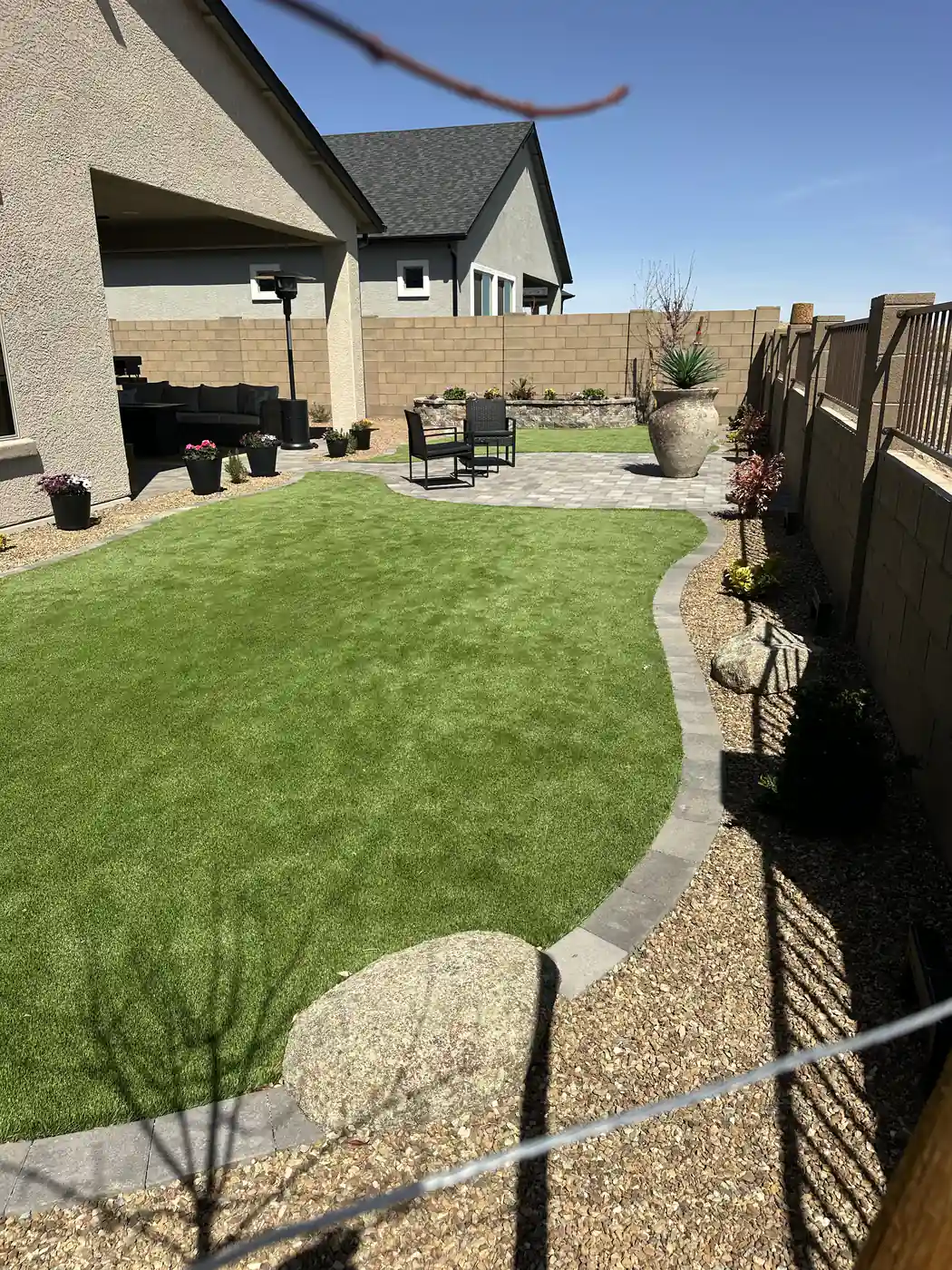
Many dog owners choose it because there is no mud and no dug-up lawn. The keys are drainage, so urine passes through the backing and base, and an infill and cleaning routine that controls odor. Rinse pet areas regularly and pick up solid waste promptly. Tell us about your pets during the design visit so we plan the base and drainage for them. More on our turf page.
What goes underneath artificial turf?
A quality installation removes the existing soil and roots to a set depth, then builds a compacted aggregate base that drains well and stays level. Edges are secured so the turf cannot lift, seams are joined carefully, and infill is brushed in to support the fibers. Skipping base work is the most common reason turf ripples, puddles or shows seams after a season.
Can synthetic turf handle snow and freezing nights?
Yes. Turf does not die back in winter, and snow simply melts and drains through. Let light snow melt on its own, and if you need to clear it, use a plastic shovel or a stiff broom rather than a metal blade that could catch the fibers. After a storm, a quick brush lifts flattened areas and spreads any infill that shifted.
Retaining walls and drainage
Why do some retaining walls lean or crack after a few years?
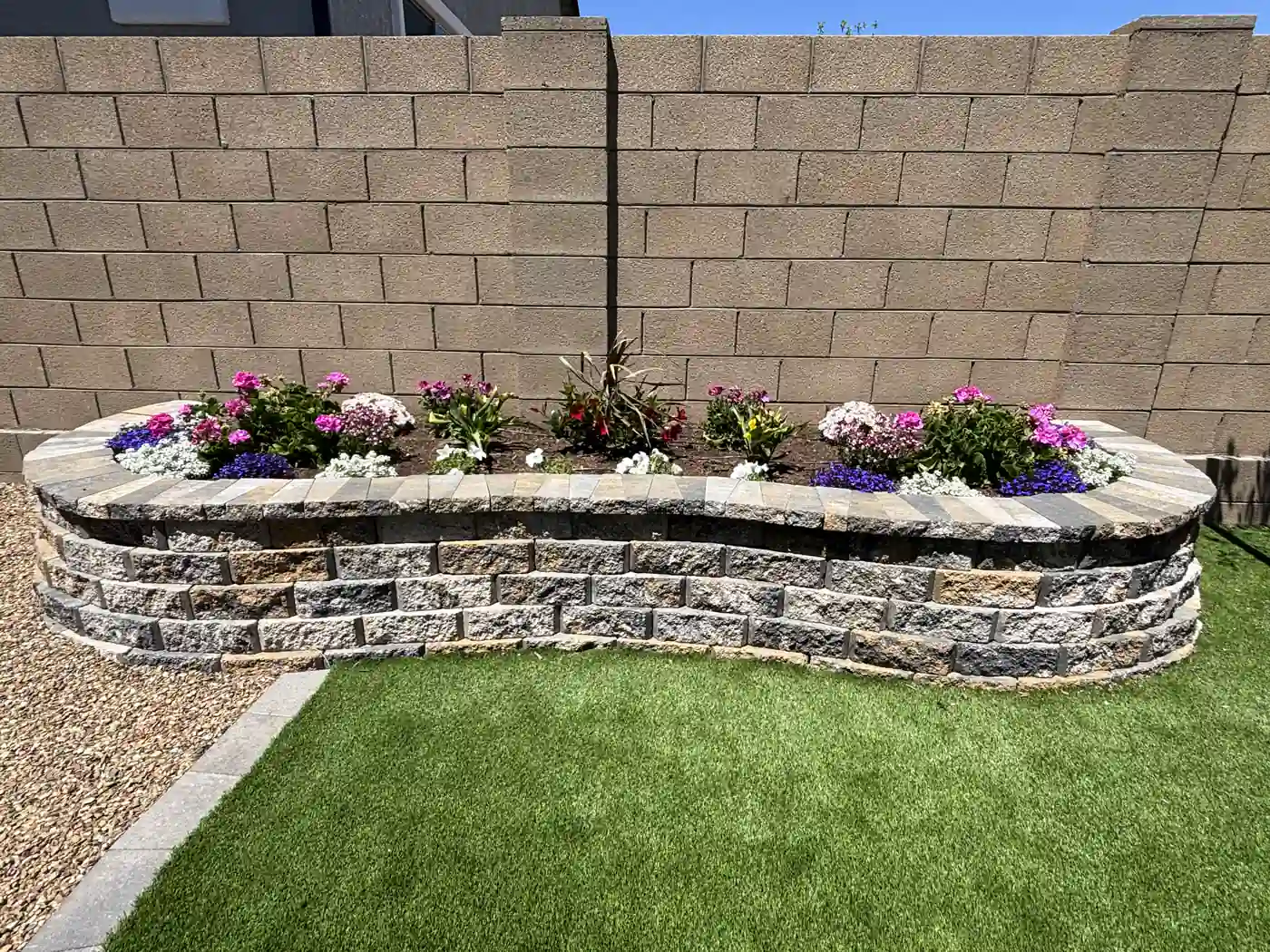
The usual cause is water and soil pressure behind the wall. Without a gravel drainage zone, a perforated drain where needed and proper backfill, water builds up behind the wall and pushes on it, especially after monsoon storms and freezes. A weak or shallow base can also settle unevenly. Taller walls may also need reinforcement or an engineered design. See our retaining wall page.
What can I do about water pooling on my patio?
First find where the water comes from: a downspout, a neighbor's slope or a patio that was built flat or settled. Small issues can be solved by redirecting downspouts or adding a channel drain at the edge. A patio that slopes toward the house needs correcting before it causes damage. Our monsoon drainage guide walks through the options.
Can a retaining wall double as extra seating?
Yes, and it is one of the most useful ways to tame a slope. A wall built at a comfortable sitting height with a smooth cap gives you built-in seating around a patio or fire pit without adding furniture. The wall still has to be built as a proper retaining structure, with drainage and a solid base, so it stays straight after years of use.
How do terraced beds help on a steep lot?
Terracing breaks one steep slope into a series of level steps held by shorter walls. Each terrace slows runoff, reduces erosion and creates flat ground you can plant, walk or sit on. Several shorter walls are often easier to build and drain than one tall wall, and they can be connected with steps so the whole hillside becomes usable space.
Irrigation, water use and plants
How can I tell if my drip irrigation system is leaking?
Watch for soggy spots or fresh weeds near a line, a water bill that jumps without explanation, emitters that sputter or stopped working, and plants that suddenly struggle at the end of a line. Run each zone for a few minutes and walk it while it runs. Small breaks from shovels, rodents or freezing are common and usually quick to repair. We can help through our irrigation service.
How should I change my irrigation timer through the year?
Water needs swing a lot here. Run fewer days through winter, increase gradually as spring heats up, and reach the peak in the hot, dry weeks of May and June. Once monsoon storms start soaking the soil, cut back or pause. A weather-based controller with the EPA WaterSense label can make many of these adjustments automatically.
Should drip irrigation be protected from freezing in Prescott?
Yes. Hard freezes can split exposed pipes, valves and especially backflow preventers. Insulate above-ground parts, and drain or shut down any section that is exposed and not needed in winter. Buried drip tubing usually handles cold better, but check the system each spring for split fittings before plants start leafing out. Damage found early is a small repair; found in June it can cost plants.
Are there plants that deer and javelina leave alone?
No plant is completely safe from hungry wildlife, but some are browsed far less than others. Strongly scented, spiny or tough-leaved natives tend to be passed over, while tender new growth and lush annuals are favorites. Protect young plants with cages until they establish, and ask the Yavapai County Cooperative Extension about local experience with specific species.
Fire pits and outdoor living
Does a gas fire pit need a gas line?
A permanent natural gas or propane fire feature needs a fuel supply, either a dedicated gas line installed by a licensed gas professional or a hidden propane tank with proper access. Wood-burning pits need no line but produce smoke and embers. Whichever you choose, check local fire restrictions and HOA rules first. Our fire pit page compares both.
How much patio space do I need for a dining table and grill?
Size the patio for the furniture you will actually use, plus room to walk around it with chairs pulled out. A grill or outdoor kitchen also needs a clear, safe zone around it, away from the table and from walls. Laying the furniture out on the ground with a tape measure before we finalize the design is the easiest way to avoid a patio that feels cramped.
Can a pergola give real shade in summer?
An open-slat pergola gives partial, moving shade. For more relief, the slats can be spaced tighter or turned to block the afternoon sun, and shade cloth, louvered panels or climbing vines can be added. Orientation matters: on many lots the hottest sun comes from the west and southwest in the afternoon, so we place the pergola and its shade where you will actually sit.
How far should a fire pit be from the house and trees?
Follow the manufacturer's clearances, local fire code and your HOA rules, which take priority. As a general rule, keep any open-flame feature well away from walls, eaves, decks, fences and overhanging branches, on a noncombustible surface. In wildfire-prone areas, clearance also protects your defensible space. Our firewise landscaping guide explains how fire features fit into a safer yard.
Maintenance and seasonal care
What does a seasonal yard cleanup usually include?
A typical cleanup covers pruning dead and crossing branches, pulling weeds and removing leaves and debris, raking gravel back into place, checking and adjusting irrigation, and clearing drains and swales. In spring we also look for winter damage; in fall we prepare for freezes. Regular visits keep small problems from growing. See our yard maintenance service.
When should shrubs be pruned in the high desert?
Most shrubs are best pruned in late winter, just before spring growth starts, so cuts heal quickly and new shoots are not exposed to a hard freeze. Spring-flowering shrubs are an exception: trim them right after they bloom. Avoid heavy pruning in late summer or fall, which can push tender growth that the first freezes then damage.
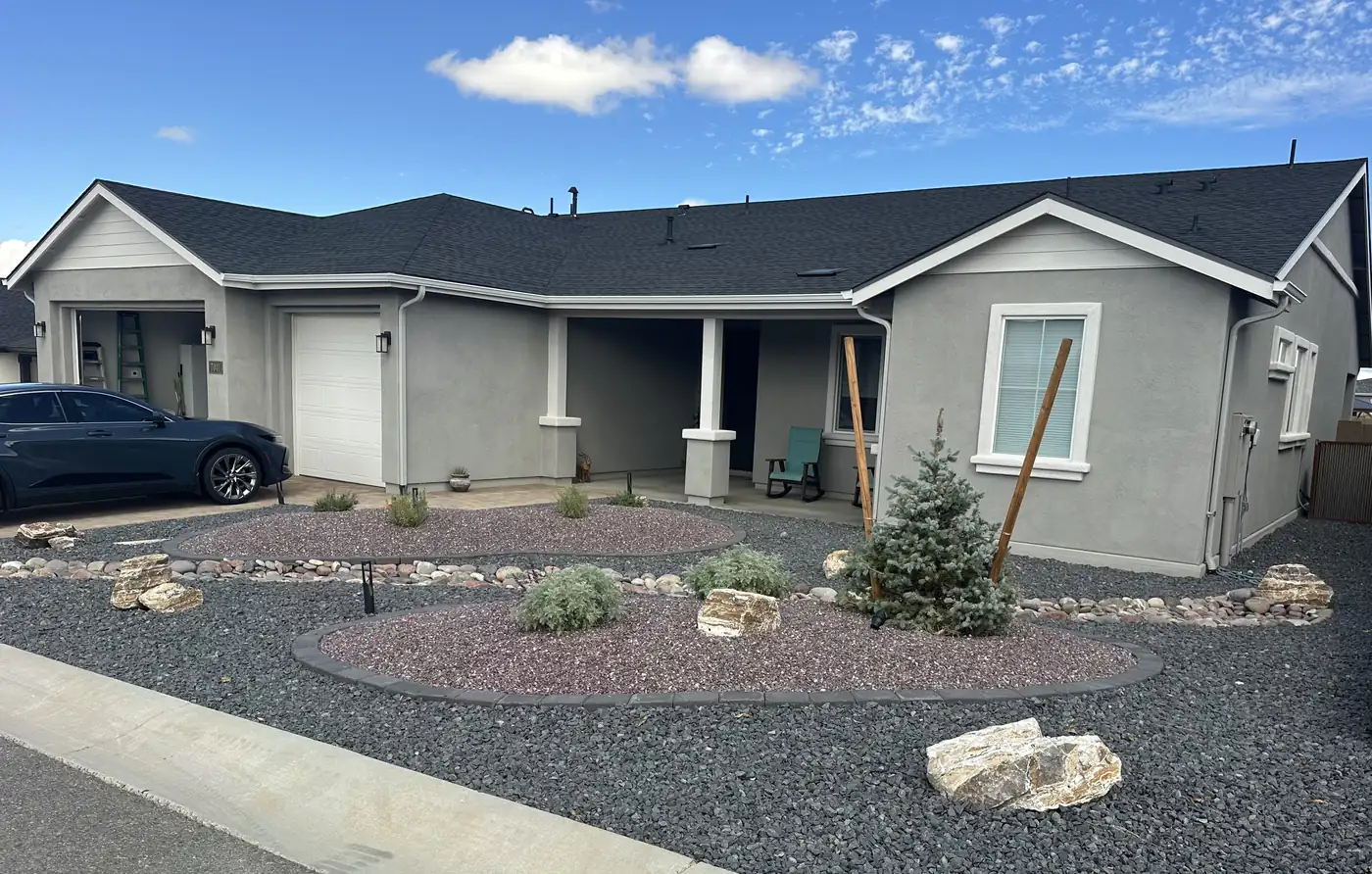
How can I keep weeds out of gravel without constant pulling?
Combine a few habits. Keep the rock at full depth so seeds have trouble reaching soil, pull or spot-treat weeds while they are small, and consider a pre-emergent product applied before seeds germinate, typically in late winter and again before the monsoon. Following the label is essential. Our front yard guide covers more ways to cut upkeep.
Do plants need water in winter?
Established plants need far less, but not zero. During long dry spells in winter, a deep watering every few weeks helps roots, especially for evergreens and newer plantings. Water on a mild day, earlier in the day, so the moisture soaks in before nightfall. Then return to your normal spring schedule as temperatures climb and the soil starts drying faster.
Hiring a landscaper
Do you work in HOA neighborhoods?
Yes. Many Prescott Valley and Prescott neighborhoods have homeowners associations with rules on materials, colors and front yard plantings. A design plan gives you the drawing and material details that review committees usually ask for, so you can submit for approval before any work begins. Waiting for written approval protects you from having to change finished work later.
How can I confirm a landscaper is licensed in Arizona?
Ask for the contractor's ROC license number, then search for it on the Arizona Registrar of Contractors site. The search shows the license status, classification and any complaint history. Ours is ROC 336502, and the company carries a bond and insurance. Checking takes a couple of minutes and is worth doing for any company before you sign.
What questions should I ask before hiring a landscaper?
Ask whether they are licensed and insured, who will be on site, whether design is included, what the written scope covers, how drainage and irrigation will be handled, how long the work should take, and what cleanup looks like at the end. Ask to see photos of their own finished projects, like our project gallery, and request a clear written estimate.
Should I call Arizona 811 before any landscaping digging?
Yes. Arizona law requires a locate request before excavation, including trenching for irrigation, footings for walls and digging holes for trees. Contact Arizona 811 ahead of time so buried utility lines are marked. Before any digging starts on your property, confirm that the locate request has been made and the marks are in place.
Creative Desert Landscaping LLC
4888 N Norman Rd, Prescott Valley, AZ 86314
(928) 848-0706
creativedesertlandscaping@gmail.com
Bonded & insured · ROC 336502
Hours
- Monday – Friday: 7am – 5pm
- Saturday: By appointment
- Sunday: Closed

Still have a question about your yard?
Call us, email a few photos or book a free on-site consultation. We will give you a straight answer and a clear written estimate.