
Creative Desert Landscaping vs a Handyman: Licensed Landscaper vs Handyman in Arizona
What Arizona law lets an unlicensed handyman do in your yard, where that line ends, and why bigger outdoor projects belong with a licensed, bonded contractor.
Should you hire a licensed landscaper or a handyman for yard work in Arizona?
When you weigh a licensed landscaper vs handyman, the size of the job decides it. Arizona lets an unlicensed handyman take only casual, minor jobs under $1,000 that need no building permit and are not part of a larger project. Patios, walls, irrigation and full yard makeovers belong with an ROC-licensed, bonded contractor such as Creative Desert Landscaping.
- License
- Arizona ROC 336502
- Coverage
- Bonded & insured
- Estimates
- Free, on-site, written
- Based in
- Prescott Valley, AZ
What does Arizona law say about a licensed landscaper vs handyman?
Arizona requires anyone who builds, alters or repairs improvements to real property for pay to be licensed by the Arizona Registrar of Contractors (ROC), unless the work fits one of the exemptions listed in A.R.S. § 32-1121. The best known of these is the so-called handyman exemption. It covers work that is casual or minor in nature, where the total price for labor and materials stays under $1,000, and where no local building permit is required.
The same section closes the obvious loopholes. The exemption does not apply when the small job is really one piece of a larger or major operation, and splitting one project into several contracts under $1,000 to dodge licensing is specifically not allowed. Anyone relying on the exemption who advertises to the public must also include the words “not a licensed contractor” in the advertisement.
There is a separate exemption for gardeners who maintain lawns, gardens, shrubs and trees. Routine upkeep such as mowing, pruning and weeding does not need a contractor license. Building something new in the yard, such as a patio, wall or irrigation system, is a different matter. Under A.R.S. § 32-1164, contracting without the required license is a class 1 misdemeanor.
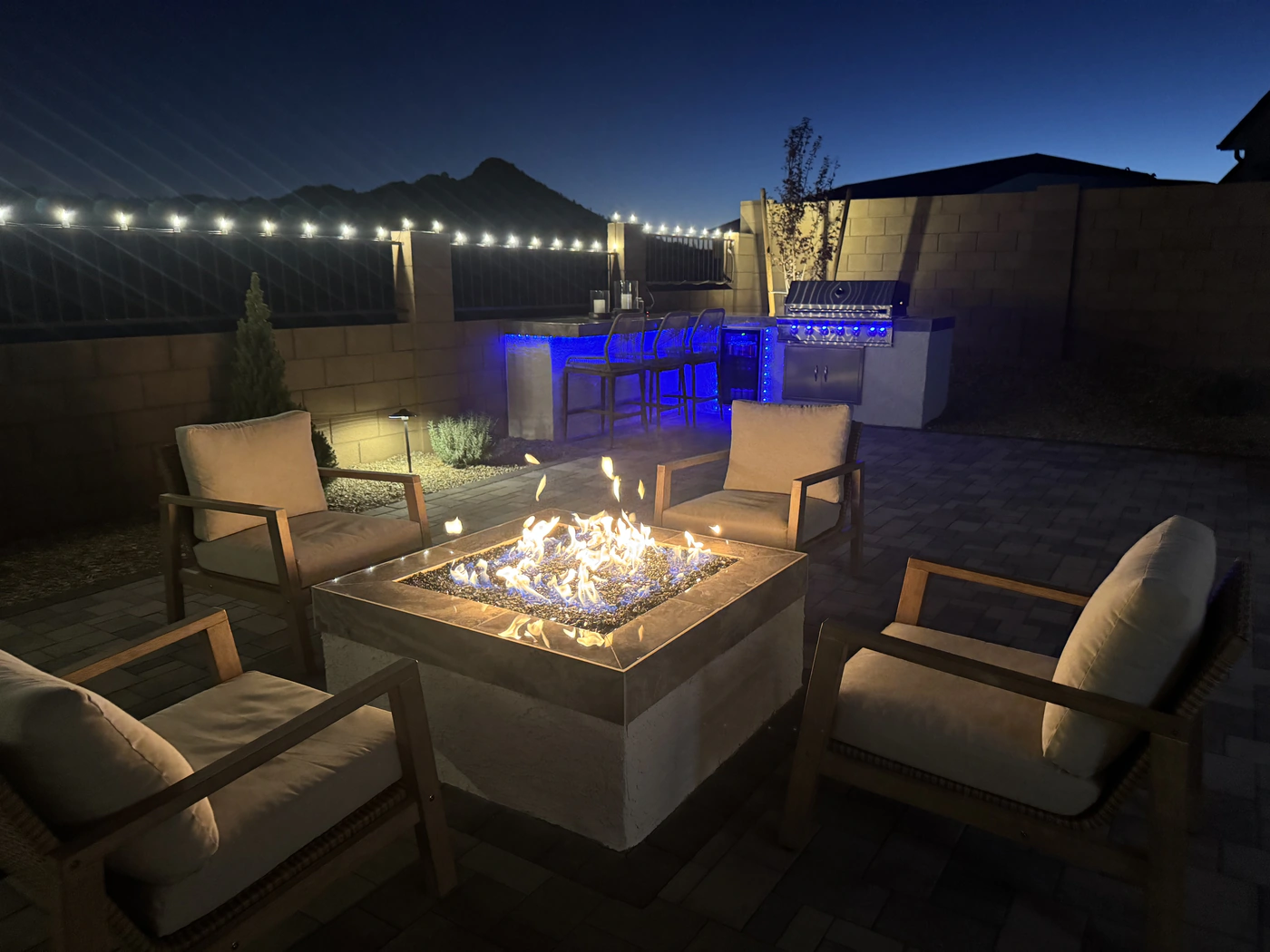
Where the handyman exemption runs out on a real yard project
The $1,000 ceiling sounds generous until you price out landscape materials. Pavers, base rock, edging, synthetic turf, drip tubing, controllers, block, cap stones and the equipment rental needed to install them add up quickly, and the limit counts labor and materials together. On most of the projects homeowners call us about, the materials alone go past the exemption before a single hour of labor is counted.
Scope matters as much as price. A low wall that holds back soil, a patio that needs a compacted base, or an irrigation system that ties into your water supply are rarely “casual or minor.” They also tend to be steps in a bigger plan: the patio leads to a fire pit, the wall makes room for a turf lawn, and the drip system feeds the new plantings. Once a job is part of that larger operation, the exemption no longer applies, whatever any single invoice says.
- Paver patios, walkways and driveway borders
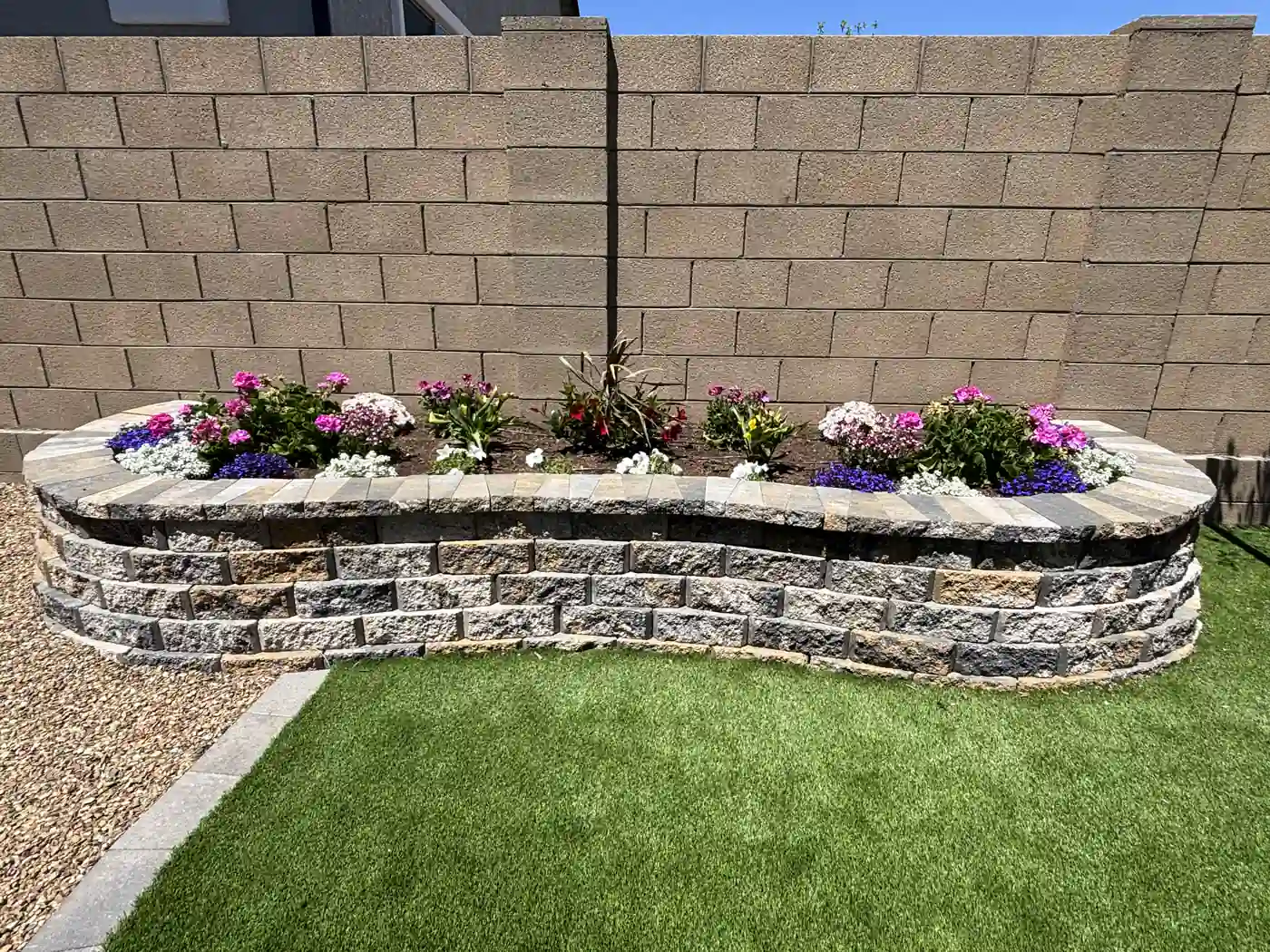
- Retaining walls and raised planter walls
- New irrigation systems, valves and drip zones
- Artificial turf with excavation, base and paver borders
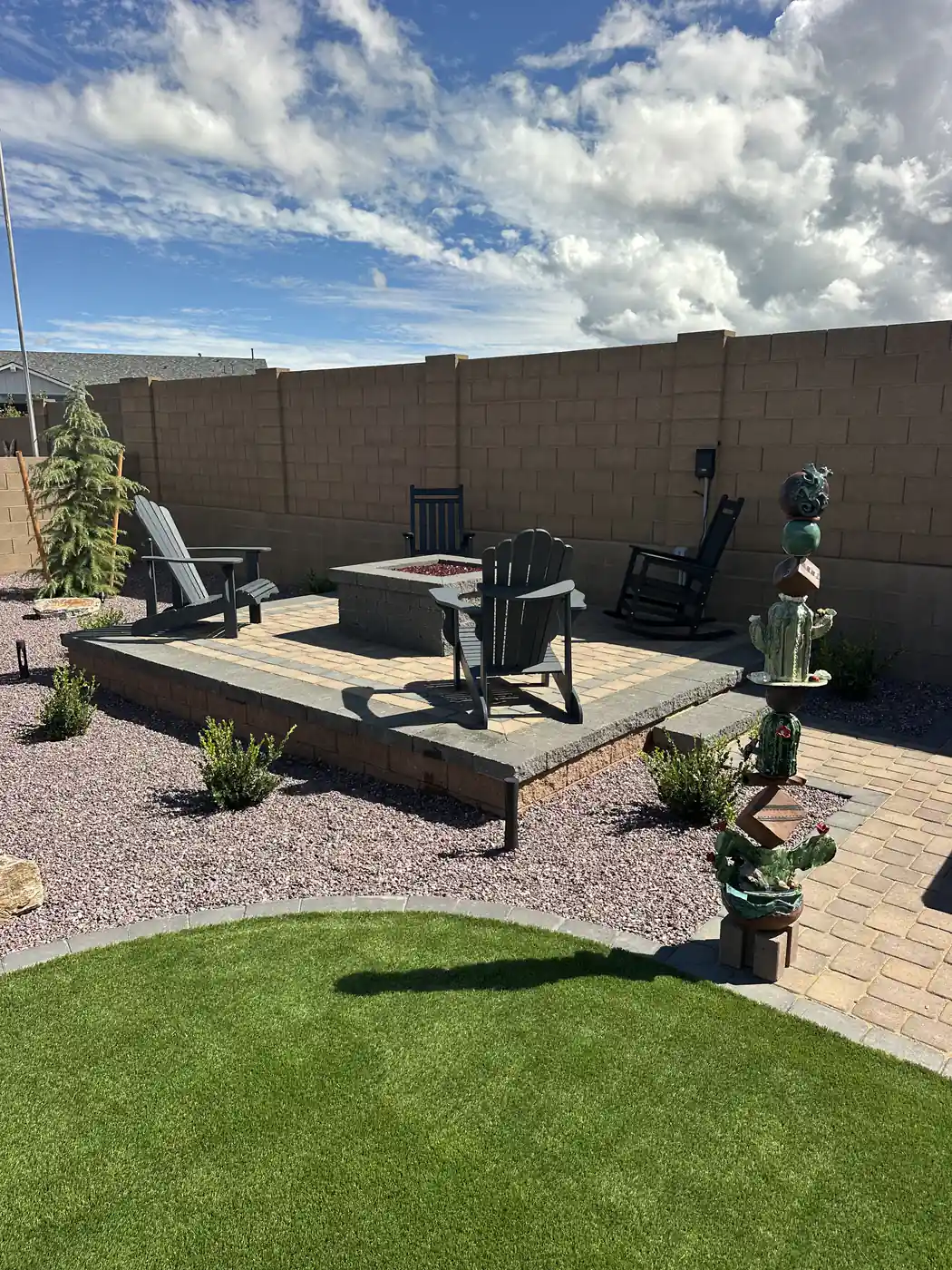
- Fire pits, fireplaces, pergolas and outdoor kitchens
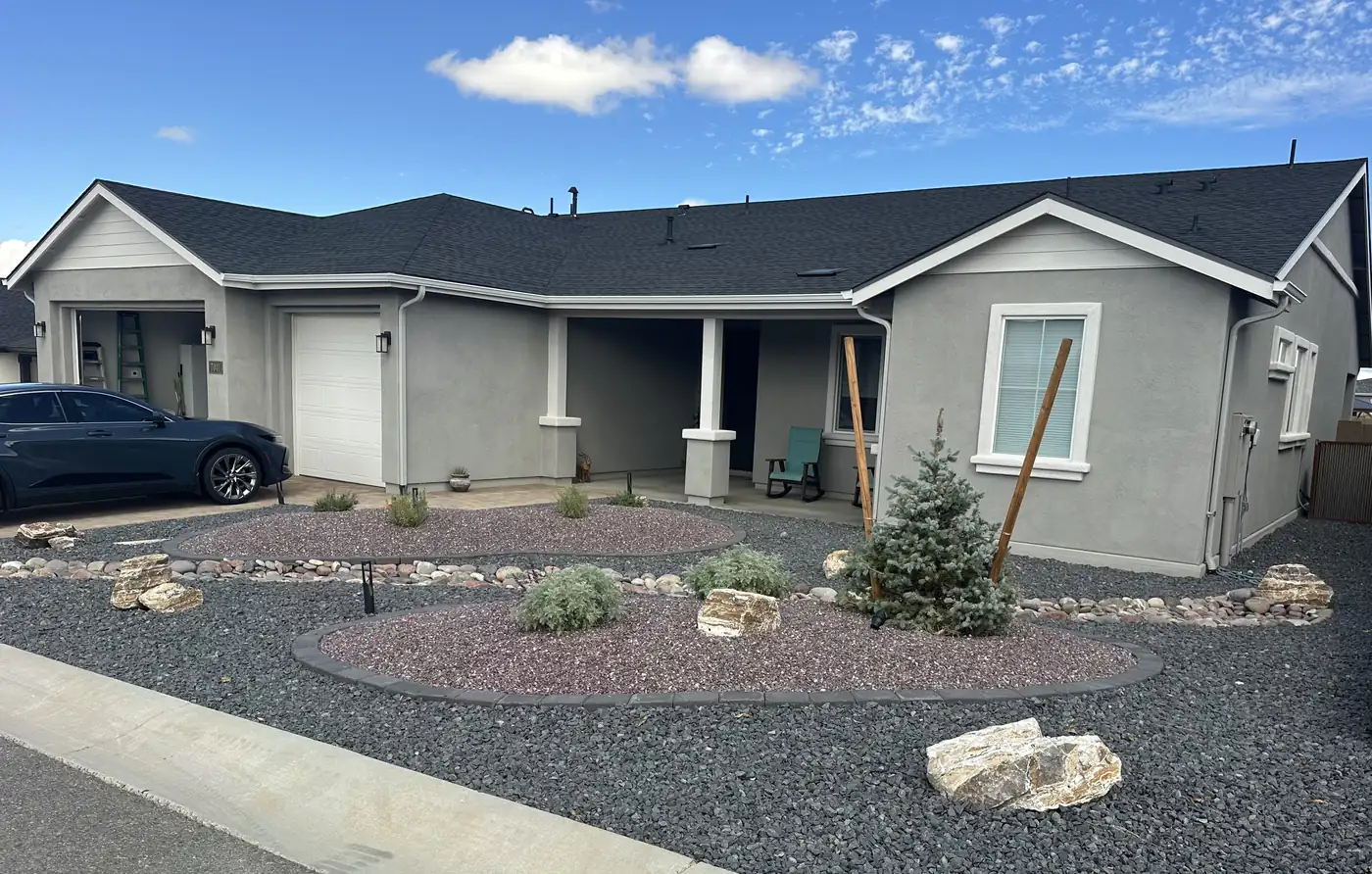
- Complete front or backyard makeovers
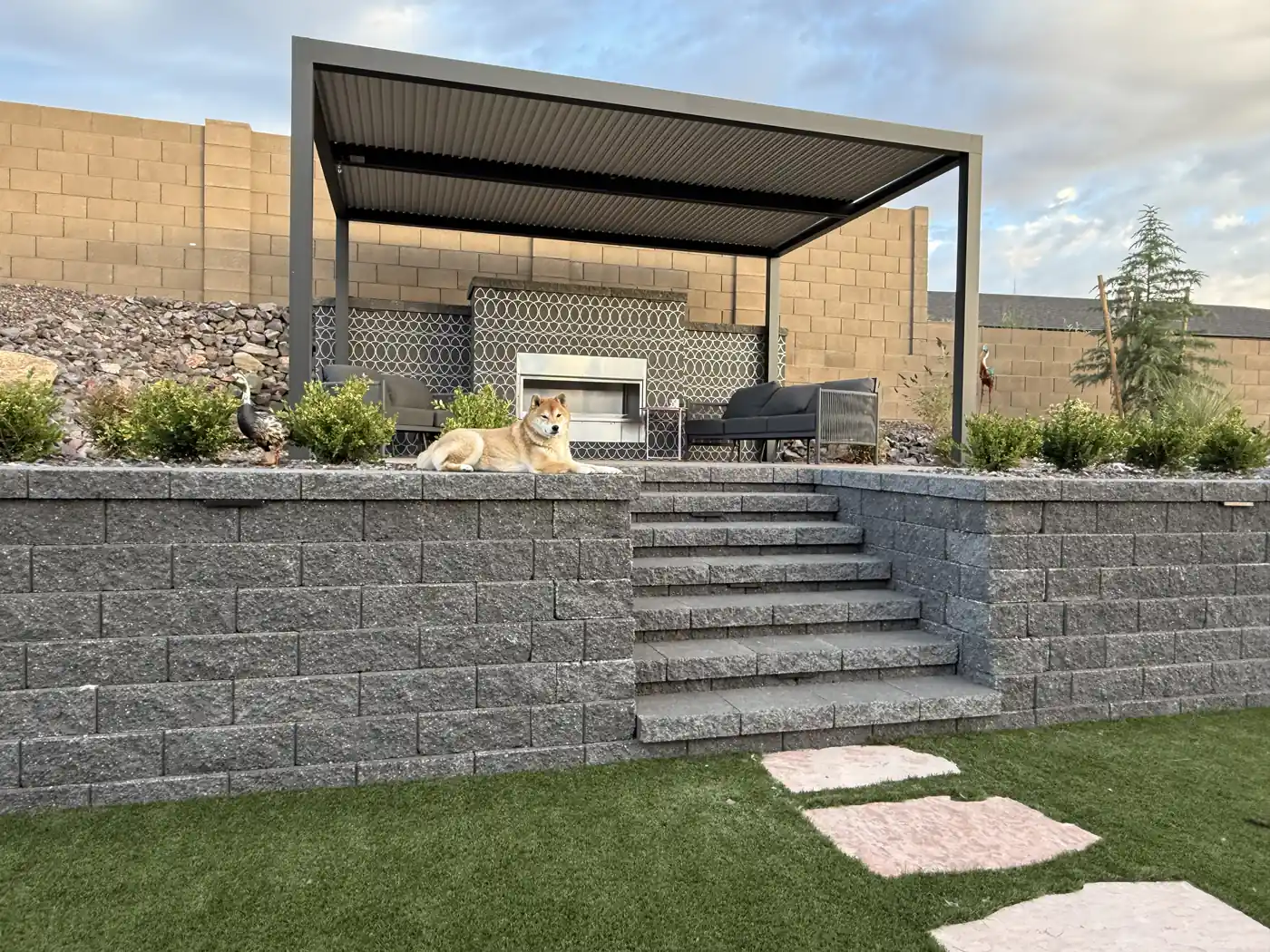
Creative Desert Landscaping vs a typical handyman, side by side
The table below compares what you can expect from our licensed crew with what the law allows an unlicensed handyman to take on. Plenty of handymen are skilled, honest people; the point is not their character but the limits the state places on unlicensed work and the protections you give up when a project goes beyond them.
| Factor | Creative Desert Landscaping | Typical unlicensed handyman |
|---|---|---|
| Arizona contractor license | Licensed by the Arizona Registrar of Contractors, ROC 336502 | None; limited to the state's minor-work exemption |
| Size of job allowed | Full yards, from one patio to a complete backyard build | Casual, minor work under $1,000 total, with no building permit and not part of a bigger project |
| Bond and insurance | Bonded and insured | Varies; ask for written proof before anyone starts |
| Design before building | Every project begins with a consultation and a landscape design | Usually works from a verbal description |
| Range of work | Design, pavers, turf, retaining walls, irrigation, xeriscaping, fire features, outdoor kitchens and maintenance | General odd jobs, often one small task at a time |
| If something goes wrong | State complaint process, license bond and, for eligible homeowners, the Residential Contractors' Recovery Fund | Usually limited to private negotiation or a civil claim |
| High-desert know-how | Local crew based in Prescott Valley that builds for freeze-thaw winters and monsoon storms | Depends entirely on the individual |
| Estimate | Free, on-site, written | Varies |
Why licensing protects you: bonds, complaints and the recovery fund
A contractor license is more than a number on a truck door. To stay licensed in Arizona, a contractor has to maintain a license bond, and the Registrar of Contractors gives homeowners a formal way to file a complaint about poor workmanship or an abandoned job. The ROC can order corrections and take action against the license, which gives a licensed contractor a strong reason to make things right.
Homeowners who hire a residential contractor that was properly licensed when the contract was signed or the work began may also qualify for the Residential Contractors' Recovery Fund. The fund can compensate eligible owners who live in the home as their primary residence for actual losses caused by a licensed contractor, up to limits set by state law. That safety net simply does not exist when the person who did the work was never licensed in the first place.
You can check any contractor's status, classification and complaint history on the Arizona Registrar of Contractors website. Our license is ROC 336502, and we encourage every customer to look it up before signing anything.
Insurance, equipment and job-site risk
Landscape construction involves skid steers, plate compactors, concrete saws, heavy block and boulders that weigh as much as a small car. When that work happens a few feet from your house, your fence and your neighbor's property, insurance stops being a formality. If an uninsured worker is hurt on your property or damages a gas line, a wall or a vehicle, the question of who pays can land on the homeowner.
Creative Desert Landscaping is bonded and insured, and we are happy to provide proof before work begins. Whoever you hire, ask for a current certificate of insurance and read who it covers. Before any digging, a locate request should go to Arizona 811 so buried utilities are marked; a professional crew treats that call as routine, not optional.
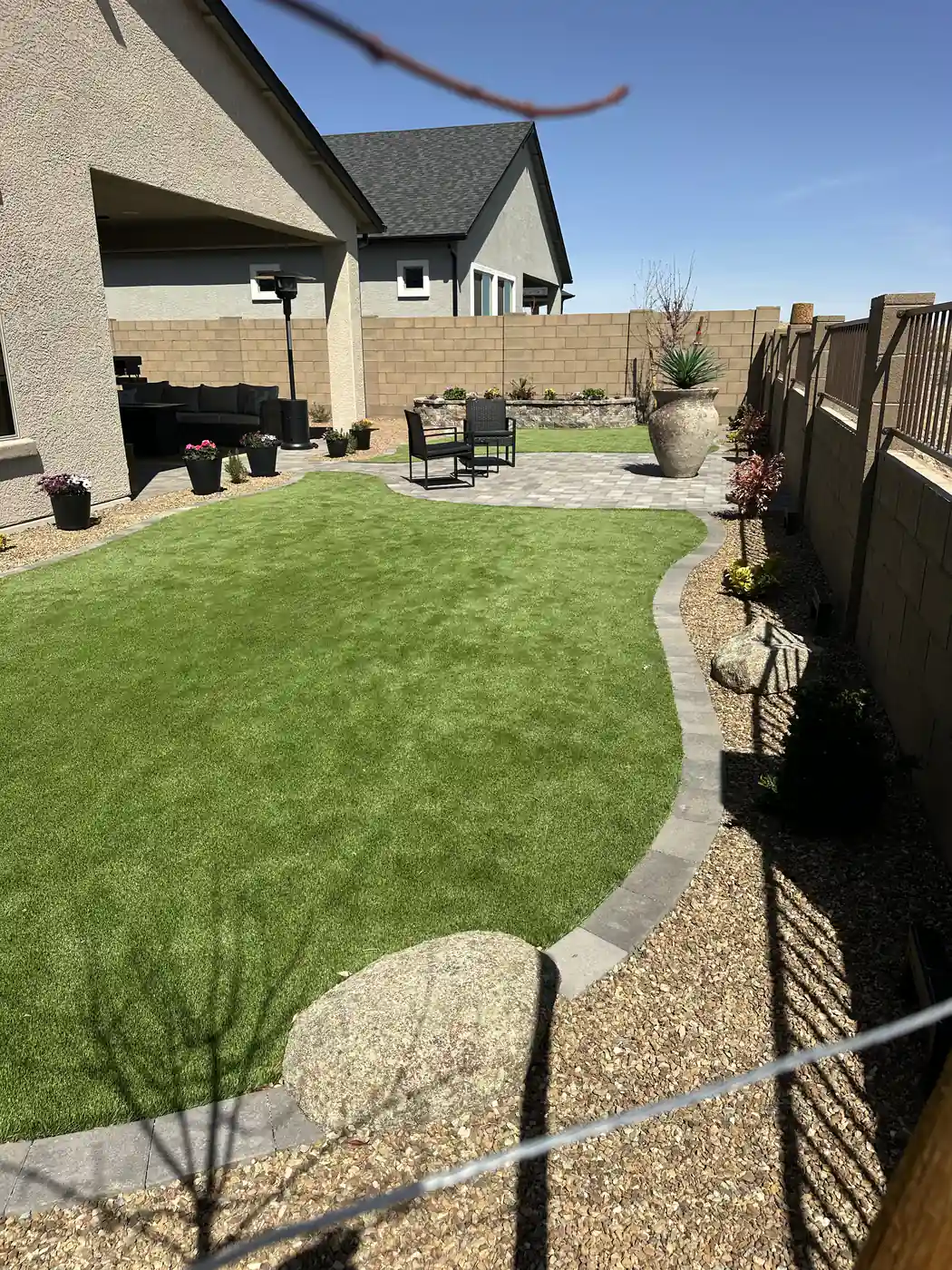
High-desert conditions raise the stakes
At roughly 5,400 feet in Prescott and just over 5,000 in Prescott Valley, local yards go through months of overnight freezes each winter, followed by dry spring winds and hard monsoon storms from July through September. Patios and walls built here have to survive frost heave, granite soils that shift and drain unevenly, and sudden runoff that can undermine a weak base.
That is why the hidden parts of a project matter most: excavation depth, compacted base rock, proper edge restraint, wall drainage and grading that sends water away from the house. Shortcuts there do not show on the day the job is finished; they show after the first winter or the first big storm. Our guides on pavers vs concrete in freeze-thaw country and monsoon yard drainage explain the details.
Many Prescott Valley neighborhoods also have HOA design rules. A licensed landscape company is used to preparing plans and material lists for architectural review, which keeps your project from stalling halfway through.
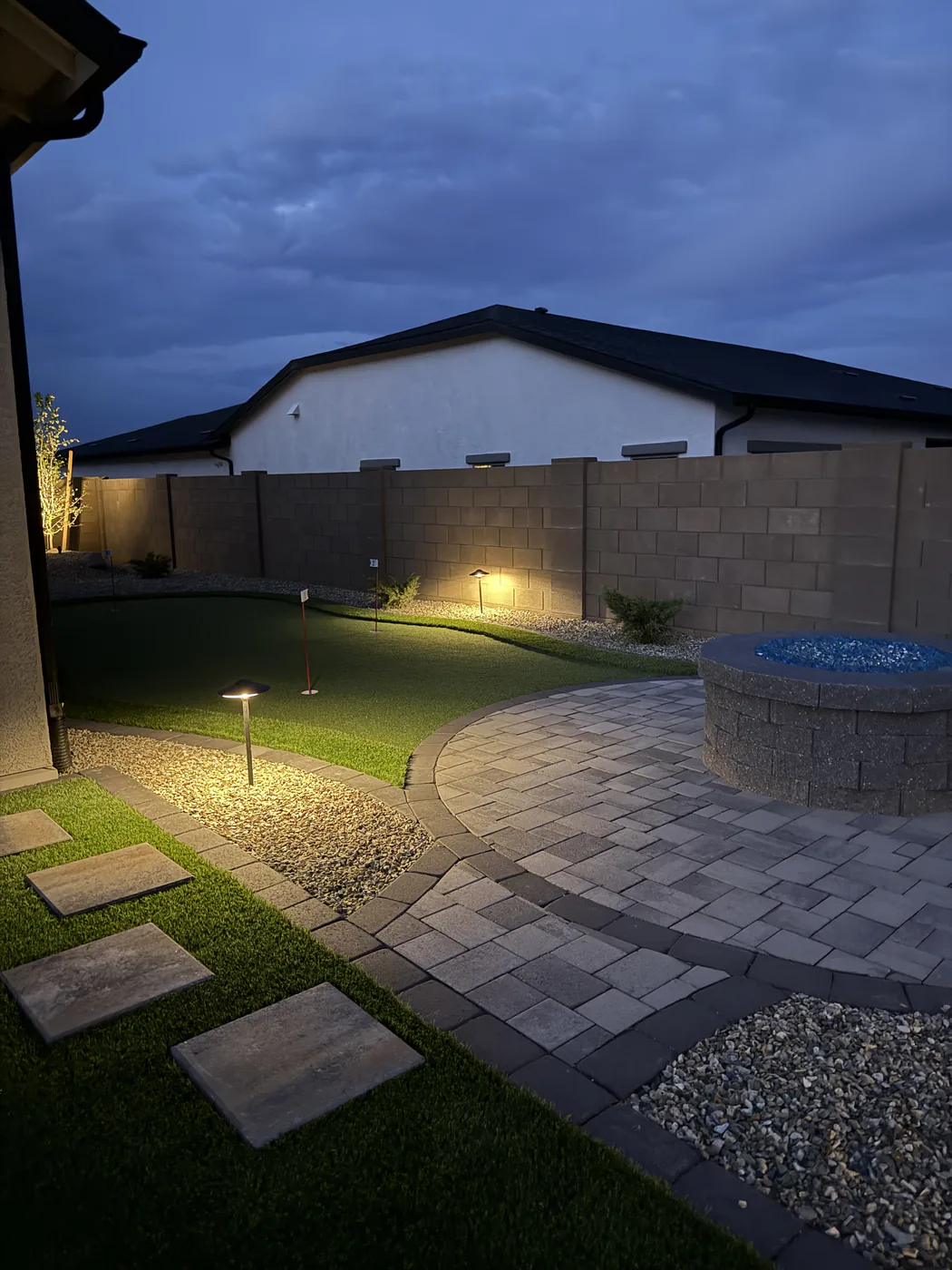
When a handyman is the right call
We are not here to say you should never call a handyman. For small, stand-alone fixes that stay well under $1,000, need no permit and are not part of a bigger build, a reliable handyman can be quick and economical. Think of replacing a broken sprinkler head, tightening a gate hinge, re-setting a few loose stepping stones or spreading a couple of yards of rock in an existing bed.
Routine upkeep is also outside contractor licensing under the gardener exemption, so mowing, pruning and weeding can be handled by any capable maintenance provider. If you would rather keep everything with one accountable team, our yard maintenance service looks after the landscapes we build and others across the area.
How to check any landscaper before you hire
Whether you call us or someone else, a few minutes of homework protects your yard and your budget. Use this checklist on every bid you collect:
- Look up the license by name or number through the Arizona Registrar of Contractors search and confirm it is active
- Make sure the license classification matches the work being quoted
- Ask for a current certificate of insurance and confirm the bond is in place
- Get a written estimate with scope, materials, price, payment schedule and start date
- Be wary of any offer to break one project into several small invoices
- Check whether advertising from an unlicensed provider carries the words “not a licensed contractor”
- Ask to see photos of finished local projects and how they held up
- Confirm who will call Arizona 811 before digging
What working with Creative Desert Landscaping looks like
Each job begins with an on-site visit that costs you nothing. We listen to how you want to use the space, look at slope, drainage, sun and soil, and then prepare a landscape design so you can see the plan before any ground is broken. Once you approve the design and written estimate, our crew handles the build, from excavation and base work to paver installation, irrigation and xeriscaping, turf and finishing touches.
When a big build calls for a specialty trade that holds its own license or certification, we bring in respected local partners and keep you dealing with a single team. Our office is in Prescott Valley, and we work on homes and commercial properties from Prescott to Chino Valley and Dewey-Humboldt, throughout Yavapai County. You can browse finished work in our project gallery before you call.
Licensed landscaping services we offer
Licensed landscaper vs handyman: your questions answered
Can a handyman legally build a paver patio in Arizona?
Only in narrow cases. The handyman exemption covers casual, minor work under $1,000 for labor and materials combined, with no building permit and not part of a larger project. Most paver patios need excavation, compacted base, edging and pavers that push the total well past that limit, so the job calls for a licensed contractor.
What does “not a licensed contractor” in an advertisement mean?
Arizona requires anyone relying on the handyman exemption who advertises to the public to include those exact words. Seeing them tells you the person is not licensed by the Registrar of Contractors and can only legally take small, minor jobs. It is a useful signal when you compare bids for anything larger than a quick repair.
Is routine yard maintenance exempt from contractor licensing?
Yes. State law exempts people who work as gardeners performing lawn, garden, shrub and tree maintenance. Mowing, pruning, weeding and similar upkeep do not need a contractor license. Building new features such as walls, patios or irrigation systems is construction, not maintenance, and falls under the licensing rules.
How do I look up a landscaper's ROC license?
Visit the Arizona Registrar of Contractors website and search by business name, person or license number. The record shows whether the license is active, its classification and any complaint history. You can search Creative Desert Landscaping using license number 336502 before you sign anything.
Can a project be split into small invoices to stay under $1,000?
No. The statute specifically says the exemption does not apply when a job is divided into contracts under $1,000 to evade the licensing law, or when the small piece is part of a larger operation. An offer to break your project into several small bills is a warning sign, not a bargain.
What happens if an unlicensed worker damages my property?
Your options are usually limited to working it out privately or pursuing a civil claim. The Registrar of Contractors complaint process, the license bond and the Residential Contractors' Recovery Fund are built around licensed contractors, so those protections are generally not available when the person who did the work was never licensed.
Is hiring a licensed landscaper always more expensive?
Not necessarily for the finished result. A licensed contractor's price includes bonding, insurance, proper equipment and a crew that builds the hidden layers correctly. Redoing a patio that heaved or a wall that leaned after one winter usually costs far more than building it right the first time. Compare scope line by line, not just the bottom number.
What details should a landscaping contract list before work starts?
Look for a clear description of the work, the materials and quantities, base and drainage details, who handles utility locates and debris removal, the total price, the payment schedule and an expected start date. A good estimate also notes what is not included, so there are no surprises once the crew arrives.
Who can file a claim with the Residential Contractors' Recovery Fund?
Generally, homeowners who live in the property as their primary residence and were harmed by a contractor that was properly licensed when the contract was signed, the first payment was made or work began. The fund has its own claim steps and limits set by state law, so check the Registrar of Contractors for current requirements.
Can I use a handyman for small fixes and a licensed landscaper for the main project?
Yes, and many homeowners do. Small stand-alone repairs under the exemption are fine for a handyman, while the patio, walls, turf or irrigation system should go to a licensed contractor. Just keep the two clearly separate so the small jobs are never part of the larger build.
Creative Desert Landscaping LLC
4888 N Norman Rd, Prescott Valley, AZ 86314
(928) 848-0706
creativedesertlandscaping@gmail.com
Bonded & insured · ROC 336502
Hours
- Monday – Friday: 7am – 5pm
- Saturday: By appointment
- Sunday: Closed

Get a licensed second opinion on your project.
Call (928) 848-0706 or send a few photos and measurements. We will visit, explain what your project really involves and give you a free written estimate.