
Creative Desert Landscaping vs an Out-of-Town Company: Why a Local Prescott Landscaper Fits Your Yard
Prescott is not Phoenix. Here is how a crew that lives with our winters, our monsoon and our granite soil compares with one that drives in from somewhere else.
Why hire a local Prescott landscaper instead of an out-of-town company?
A local Prescott landscaper designs for conditions an out-of-town crew may never deal with at home: hard winter frosts, freeze-thaw ground movement, a bone-dry spring and heavy monsoon storms on granite soil. Creative Desert Landscaping is based in Prescott Valley, so plant choices, base depths, drainage and follow-up visits all come from working here every week.
- Based in
- Prescott Valley, AZ 86314
- Elevation we build for
- About 5,000–5,400 ft
- Licensed
- Bonded & insured · ROC 336502
- Estimates
- Free consultation on your property
Why does it matter where your landscaper is based?
Landscaping is local work in the most literal sense. The same paver patio, turf lawn or planting bed behaves very differently depending on the ground under it and the weather above it. When a company spends most of its year in one climate, its habits, its favorite plants and even its standard base depths are tuned to that climate. Those habits travel with the crew when it takes a job somewhere else.
That is not a criticism of anyone. It is simply how trades work: people get very good at the conditions they see every day. The question for a homeowner in Prescott, Prescott Valley, Chino Valley or Dewey-Humboldt is whether the crew you hire sees your conditions every day. For us the answer is yes. Our office is on N Norman Rd in Prescott Valley, and the yards we design, build and maintain are spread across Yavapai County.
This page compares Creative Desert Landscaping with a typical out-of-town company, without naming anyone. Use it as a checklist of questions to ask, whoever you end up hiring.
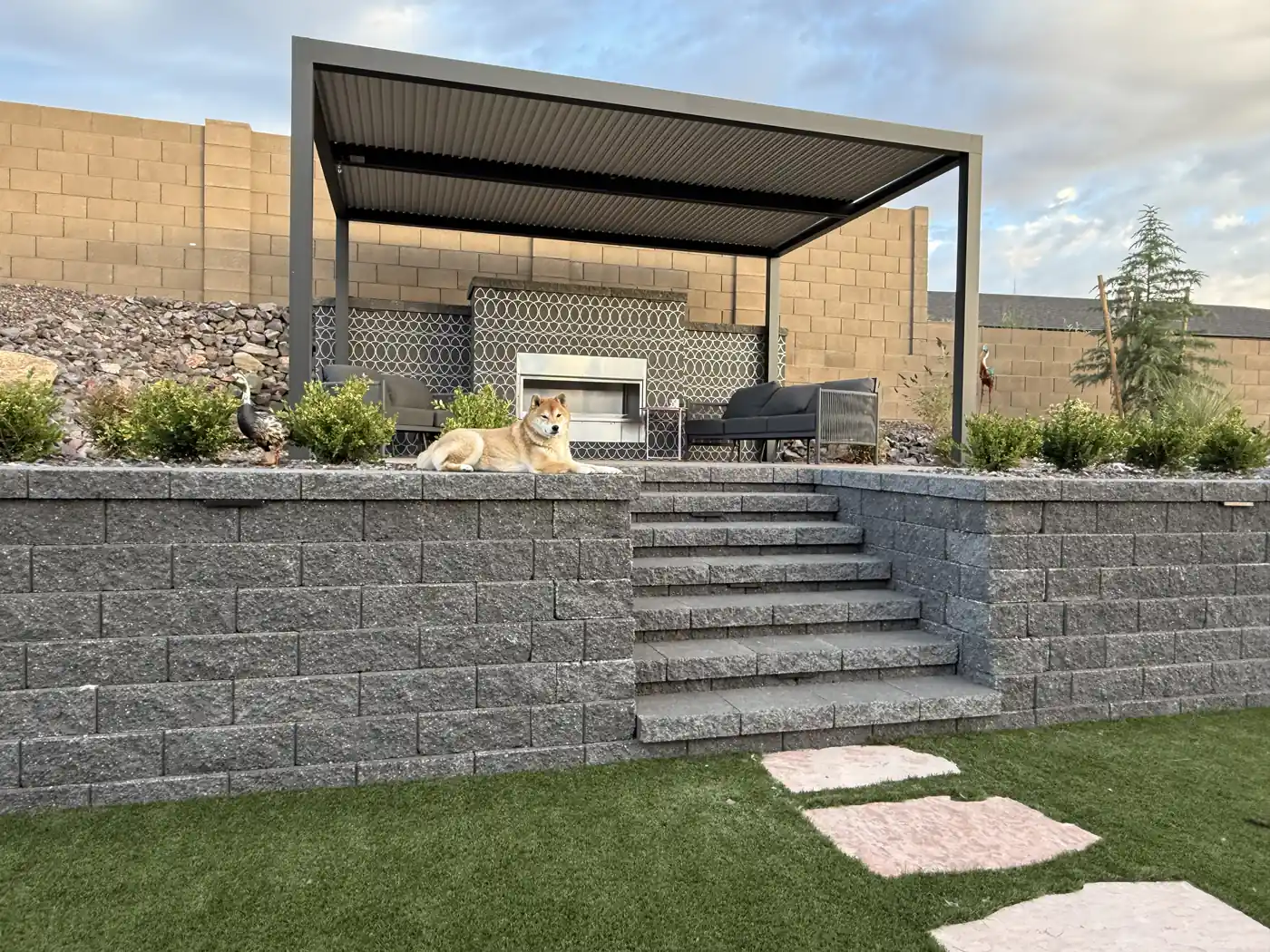
Prescott is not Phoenix: the climate gap in numbers
Many landscaping companies that serve Arizona are built around the low desert. Phoenix sits at about 1,086 feet, averages roughly 7.2 inches of rain a year and, according to its climate records, sees around 111 days a year at 100°F or hotter while rarely dropping to freezing (Phoenix climate overview).
Prescott plays by different rules. It sits at about 5,400 feet in the Bradshaw Mountains and averages about 16.5 inches of precipitation a year, with the biggest share arriving in the July-to-September monsoon (Prescott climate overview). Its average freeze season runs from roughly October 21 to May 1, and 100°F days are rare. Prescott Valley, at around 5,060 feet, shares most of that pattern. Even the weather forecasts come from different offices: the low desert is covered by the National Weather Service in Phoenix, while our area falls under the National Weather Service office in Flagstaff.
Put simply, a yard in Phoenix is designed mainly to survive heat. A yard here has to survive heat, hard frost, a long dry spring and sudden summer downpours, often in the same year. That changes almost every decision we make.
- Roughly 4,300 feet higher than Phoenix
- More than double Phoenix's average yearly rainfall, much of it in a few weeks of storms
- A real freeze season of more than six months
- Granite-based soils around Prescott and the Granite Dells
What a local Prescott landscaper does differently
Being local only matters if it shows up in the work. Here is where it shows up in ours.
Plants chosen for cold as well as drought. A plant that thrives in a Scottsdale front yard can turn to mush after a single hard night in Prescott Valley. We choose species that are both water-wise and cold hardy for our elevation, and we place the most tender ones where walls and boulders hold a little warmth. Our guide to drought-tolerant plants for Prescott explains the thinking in detail.
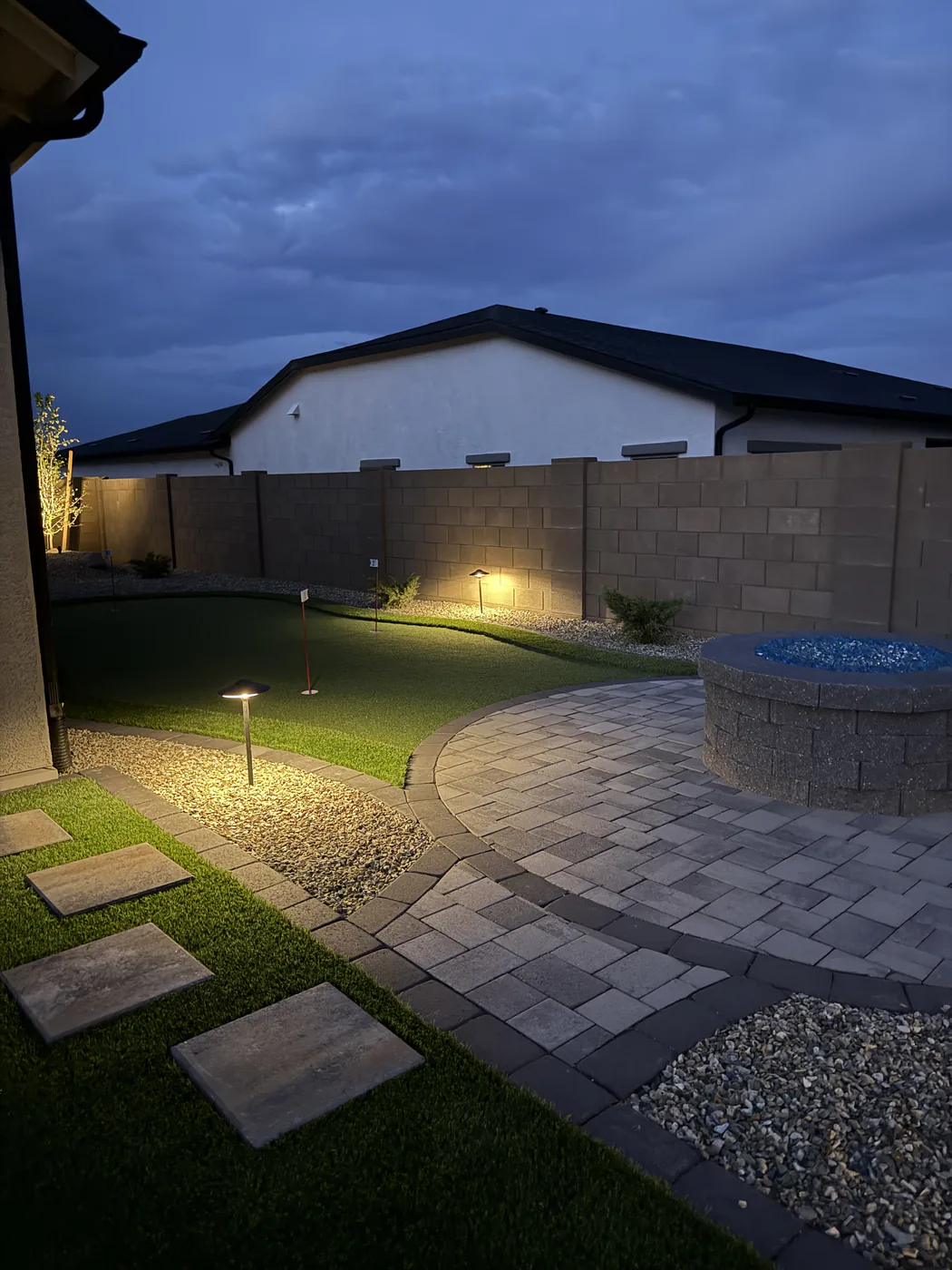
Hardscape built for freeze-thaw. Water that seeps under a patio and freezes can lift pavers and crack slabs. We plan base depth, compaction and edge restraint with our winters in mind, which is why so many of our clients choose interlocking pavers for patios, walkways and driveways.
Drainage planned for monsoon storms. A storm that drops a large share of a month's rain in an afternoon will find every low spot in your yard. We grade, route downspouts and shape channels so water leaves the house fast. The monsoon yard drainage guide covers what we look for.
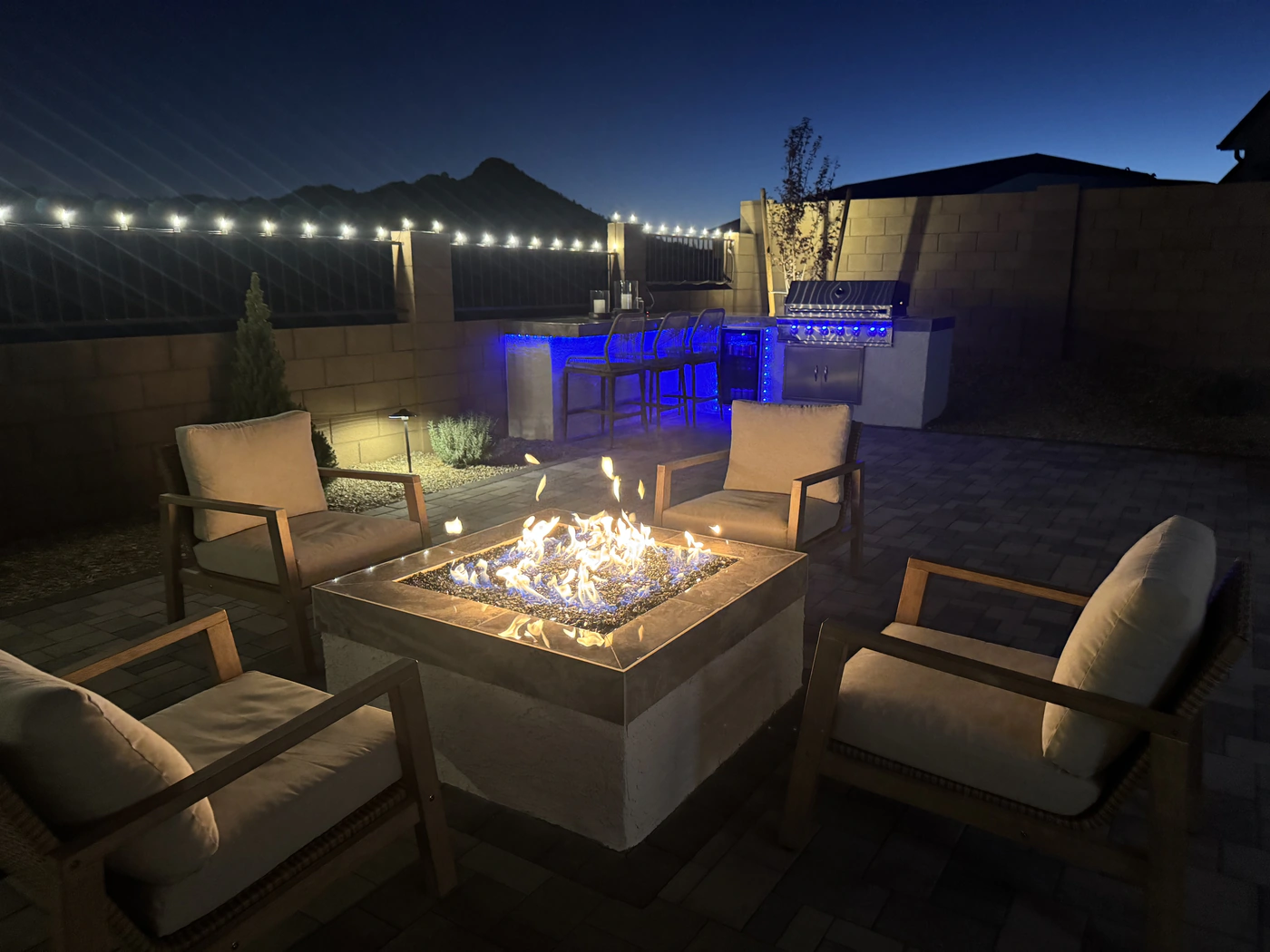
Side by side: Creative Desert Landscaping vs a typical out-of-town company
The table below sums up the practical differences homeowners tell us they care about. The right-hand column describes what can happen with a company based elsewhere; plenty of good contractors travel well, so treat it as a list of things to ask about rather than a verdict.
| Factor | Creative Desert Landscaping (local) | Typical out-of-town company |
|---|---|---|
| Home base | Office on N Norman Rd in Prescott Valley, inside the area we serve | Often based in the Phoenix area or another region, with a long drive to each job |
| Climate the crew designs for | High desert at roughly 5,000-5,400 ft: hard frosts, freeze-thaw cycles, a dry spring and a July-September monsoon | May be built around low-desert conditions, where frost is rare and summer heat is the main concern |
| Plant choices | Picked for local cold hardiness as well as drought tolerance | Can lean on low-desert favorites that may struggle after a hard Prescott freeze |
| Hardscape base and drainage | Base depth, compaction and runoff paths planned for frost movement and monsoon downpours | Specifications may follow a hotter, drier region's habits |
| Estimates and site visits | Free consultation on your property; design comes first | Some quote from photos or charge for travel; ask before you book |
| Scheduling around weather | Crew is nearby, so work can shift around storms and cold snaps | Longer drives can make rescheduling harder |
| After the job | Same local team for tune-ups, irrigation checks and ongoing yard maintenance | Follow-up visits may depend on when a crew is next in the area |
| Licensing | Bonded and insured, Arizona ROC license 336502 | Varies; always look the license up with the ROC |
Local knowledge goes beyond the weather
Climate is the obvious difference, but it is not the only one. Neighborhoods in Prescott Valley in particular often have HOA rules about front-yard rock colors, turf, plant coverage and walls. Knowing what usually gets approved, and preparing a clear plan and material list for the review, saves weeks of back-and-forth. Larger lots out toward Chino Valley and Dewey-Humboldt bring their own questions about wind, long irrigation runs and native brush.
Before any digging, we put in a locate request through Arizona 811 so buried utilities are marked. When a bigger construction element needs a specialty license or certification, we bring in trusted partners from the Yavapai County trades, people we know and see on job sites around the county.
Local also means accountable. Our name, our office address and our phone number are the same ones our neighbors use. If something needs attention after the job, we are a short drive away, not a long trip that has to wait for the next booking in the area.
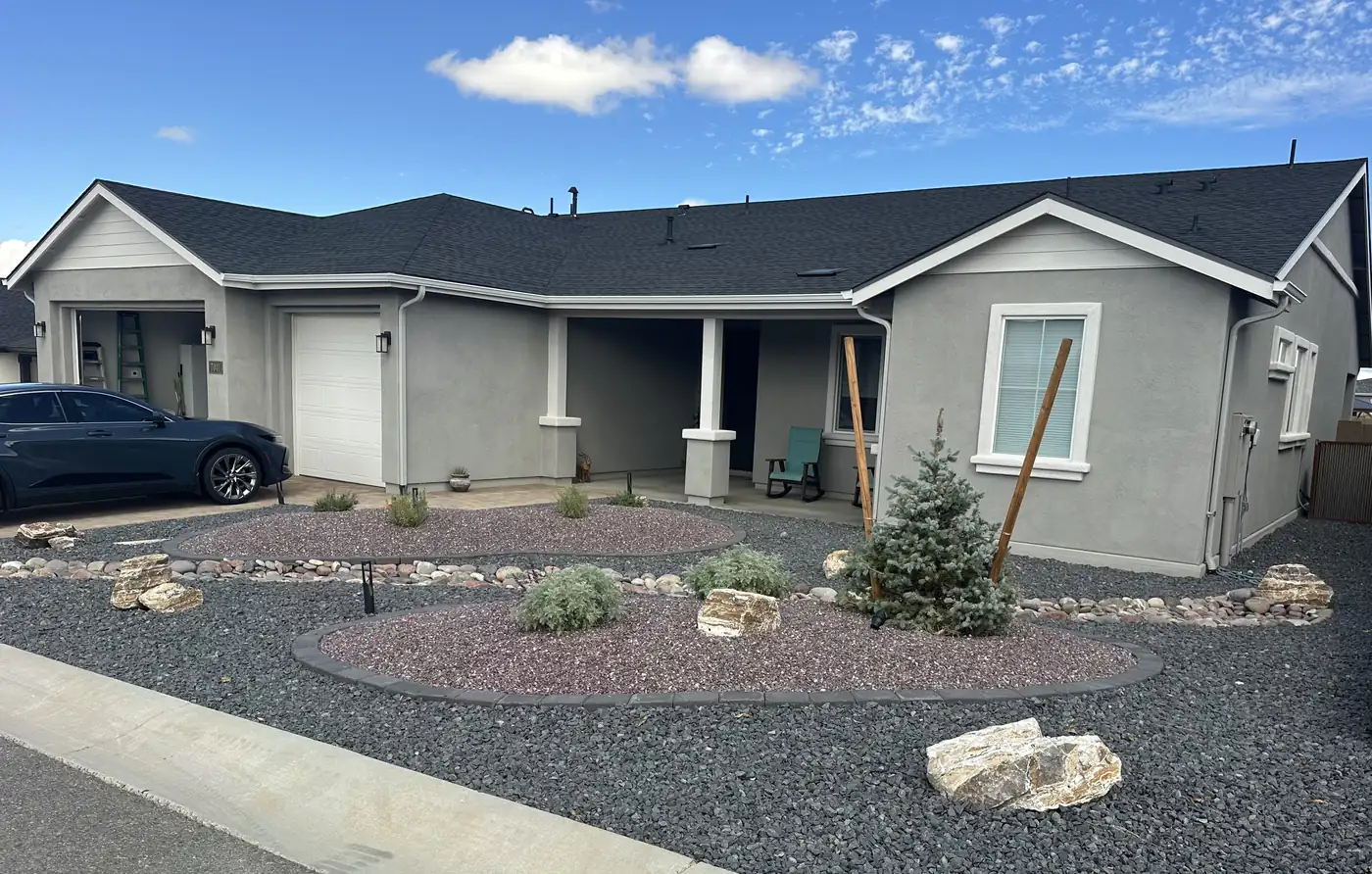
When an out-of-town company can still make sense
To be fair, there are situations where a company from outside the area is a reasonable choice. A very specialized feature, such as an unusual water feature or a commercial product that only a few installers in the state carry, may require bringing someone in. Some regional companies also have long experience with high-elevation work.
If you are weighing one, ask direct questions. Which plants would they use here, and how do those plants handle a hard freeze? How deep will the base be under a patio, and why? Where will storm water go? Who comes back if a drip line fails in August or a paver settles after the first winter? The answers will tell you quickly whether the plan was written for Prescott or for somewhere else.
How to check any landscaper before you sign
Whether you call us or anyone else, these checks protect your yard and your budget. They take minutes and they are worth it.
- Look up the contractor's license with the Arizona Registrar of Contractors and confirm it is active
- Ask for proof of bond and insurance
- Get a written scope that names materials, base depth, drainage and plant list
- Ask which plants are cold hardy for your exact elevation; check your ZIP on the USDA Plant Hardiness Zone Map
- Ask how storm water will leave the yard and where downspouts will discharge
- Confirm who handles follow-up visits, irrigation checks and seasonal care
- Check that any HOA approval is in hand before work starts
Working with a local Prescott landscaper from first call to finished yard
Every project with us starts the same way: a free consultation on your property, where we look at sun, slope, soil, drainage and where you plan to spend time outdoors. From there we build a landscape design that fits your goals and your budget, then our crew installs it.
Because we stay in the area, the relationship does not end at the final walkthrough. Many clients keep us on for yard maintenance, irrigation adjustments as the seasons change, and add-ons like a fire pit or outdoor kitchen a year or two later. For extra local plant and water advice, the University of Arizona Cooperative Extension in Yavapai County is an excellent free resource.
Want to see the results first? Browse our project gallery, read about our company, or call (928) 848-0706 to set up your free consultation.
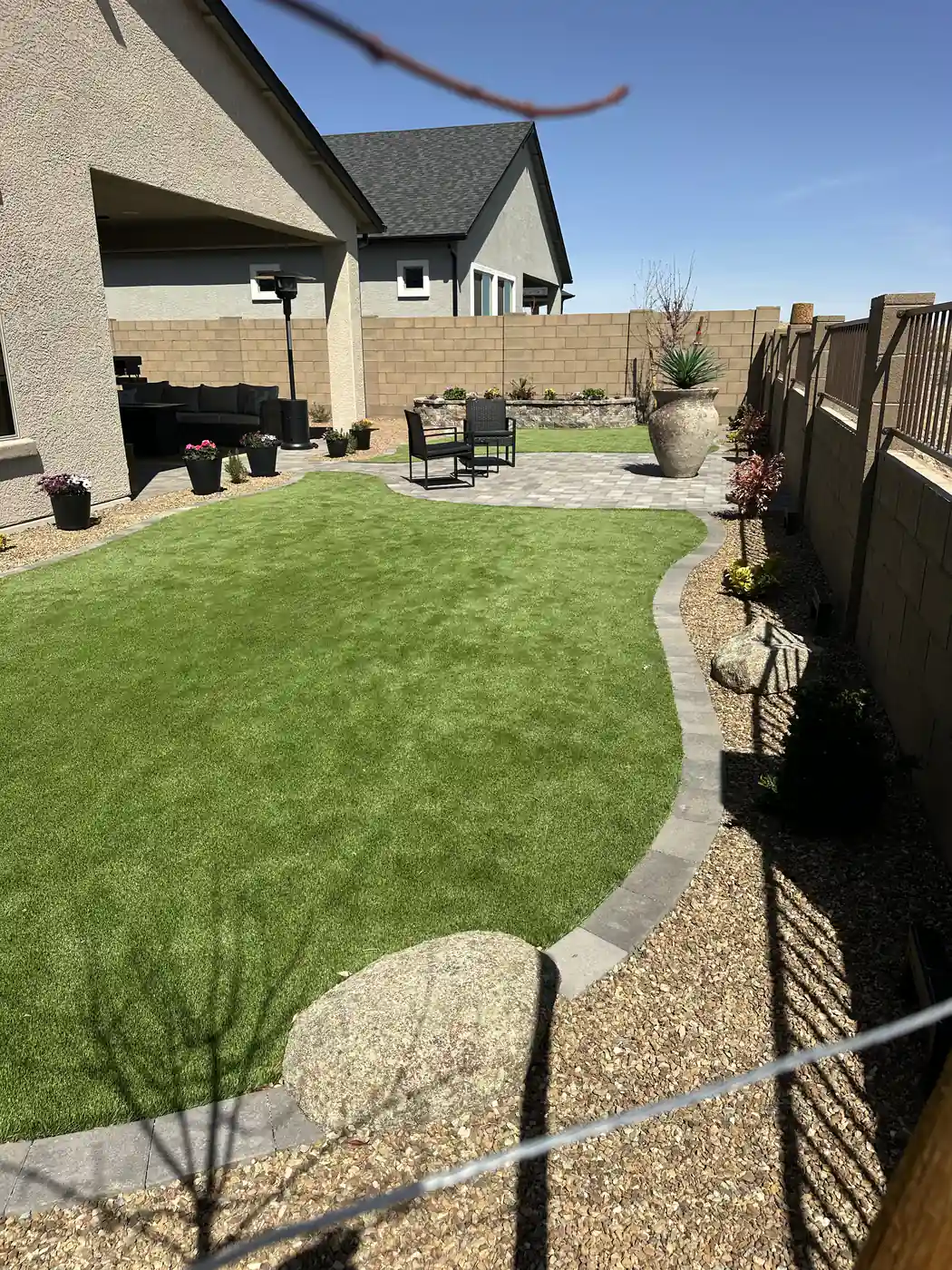
Explore local services
Local Prescott Landscaper vs Out-of-Town Crew: Your Questions Answered
Is a landscaper from Phoenix able to work in Prescott?
Yes, contractors can work anywhere their Arizona license allows. The real question is whether their design suits a high-desert yard. Prescott is roughly 4,300 feet higher than Phoenix, with a long freeze season and heavy monsoon storms, so ask how their plant list, base depth and drainage plan account for those conditions before you sign.
What landscaping mistakes come from low-desert habits?
The common ones are choosing plants that are drought tolerant but not cold hardy, building patio bases that are too thin for freeze-thaw movement, and ignoring where monsoon runoff will go. Each looks fine on day one and shows up after the first hard winter or the first big July storm.
Does being local change the price of a landscaping project?
Price depends on the design, materials and site, not on where the office is. Being nearby does remove long travel from the picture and makes return visits simpler. We give a free on-site consultation and a written estimate, so you can compare scope and materials line by line with any other quote.
How do I know which plants are hardy enough for my yard?
Start by typing your ZIP code into the USDA hardiness map to find your zone, then match plants to that zone and to your exposure. Low spots and north-facing beds run colder. We pick plants for each part of the yard during design and explain why each one was chosen.
Can you help with HOA approval in Prescott Valley?
Yes. We prepare a clear plan with materials, rock colors and plant choices that you can submit to your association, and we adjust the design if the review asks for changes. Work and deliveries should only start once you have the HOA's written approval in hand.
What happens if something needs fixing after installation?
Call our office in Prescott Valley. Because our crew works in the area every week, a settled paver, a clogged drip emitter or a turf seam that needs attention can be looked at without waiting for a long-distance trip. Many clients also add ongoing maintenance so small issues are caught early.
Do you work outside Prescott and Prescott Valley?
Yes. Our service area covers homes and businesses in Prescott and Prescott Valley, out to Chino Valley and Dewey-Humboldt, and across Yavapai County. If your property sits somewhere else in the county, call or send a message and we will let you know if it is within reach.
How can I check that a landscaping contractor is licensed?
Use the license search on the Arizona Registrar of Contractors website. Enter the company name or license number and confirm the license is active and covers the type of work you need. Ours is ROC 336502, backed by bond and insurance coverage.
When is the best season to start a project in the Prescott area?
Most hardscape can be built through much of the year, but planting usually goes best in early fall or after the spring frost risk passes. Drainage work is smartest before July, ahead of the monsoon. During your consultation we suggest a schedule that fits your project and the season.
What should I prepare before a free consultation?
Think about what you hope to do outside, note any wet spots or problem areas you have seen after storms, and gather HOA guidelines if you have them. Photos and rough measurements help too. Then call (928) 848-0706 or use our contact page to book a visit.
Creative Desert Landscaping LLC
4888 N Norman Rd, Prescott Valley, AZ 86314
(928) 848-0706
creativedesertlandscaping@gmail.com
Bonded & insured · ROC 336502
Hours
- Monday – Friday: 7am – 5pm
- Saturday: By appointment
- Sunday: Closed

Talk to a crew that works here every day.
Free on-site consultation anywhere we serve in Yavapai County. Call (928) 848-0706 or send us a few photos and we will set up a visit.